
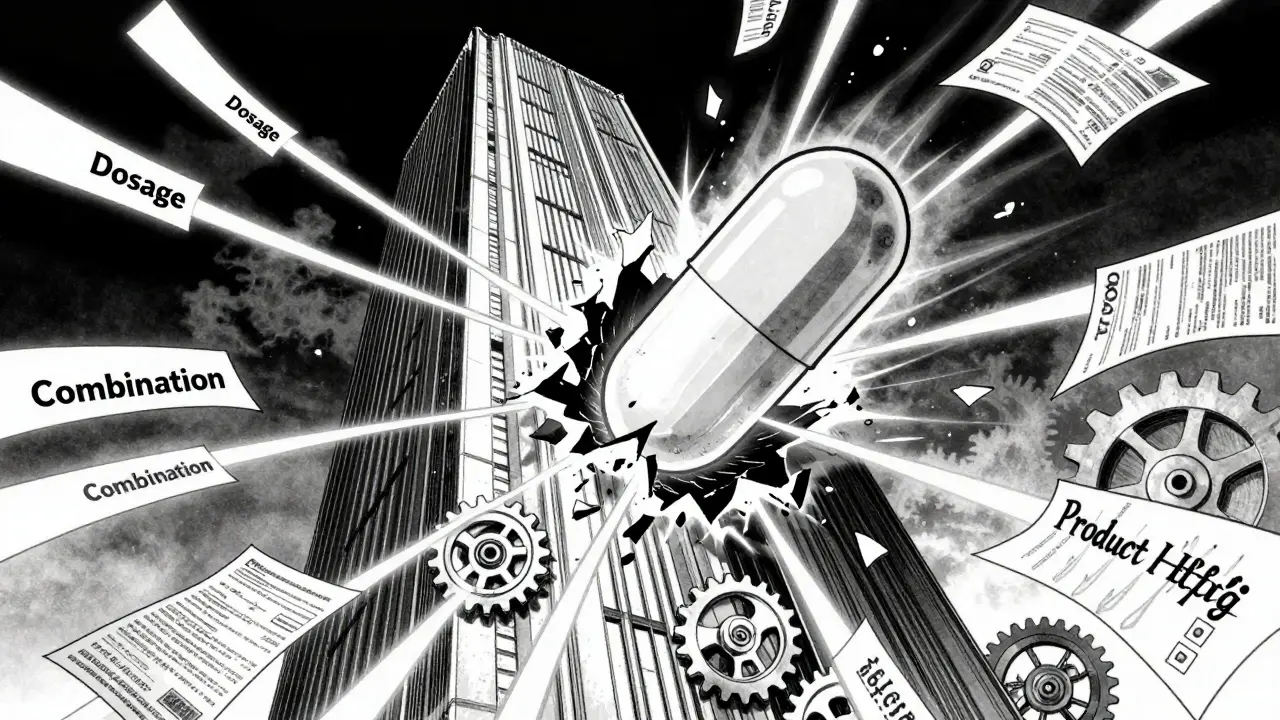
When a blockbuster drug’s patent runs out, prices should drop-fast. Generic versions flood the market, and patients pay a fraction of what they once did. But in many cases, that drop never happens. Why? Because pharmaceutical companies have spent decades perfecting a legal trick called evergreening.
What Evergreening Really Means
Evergreening isn’t about inventing new medicine. It’s about tweaking old ones just enough to file a new patent. Think of it like changing the color of your car, then claiming it’s a new model. The engine? Same. The performance? Nearly identical. But now, you get another 20 years of monopoly pricing. This isn’t theory. It’s routine. Between 2000 and 2018, 78% of all new patents for prescription drugs were for existing medications, not new ones. That’s not innovation-it’s legal gymnastics. Companies like AstraZeneca and AbbVie have used this to extend protection on drugs like Nexium and Humira for decades beyond their original patent life. The original patent clock starts when a drug is first approved. It lasts 20 years. But thanks to evergreening, some drugs stay protected for 30, 40, even 50+ years. That’s not a bug in the system. It’s the design.How It Works: The Playbook
There are dozens of tactics, but here are the five most common:- New dosage forms: Switching from a pill to a liquid, or from daily to once-weekly. Even if the active ingredient hasn’t changed.
- Combination drugs: Bundling two old drugs into one pill. Patent the combo. Even if each component was off-patent years ago.
- Product hopping: Launching a slightly modified version-say, a capsule instead of a tablet-then pulling the original off shelves. Patients are forced to switch, even if the new version offers no real benefit.
- Patent thickets: Filing dozens, sometimes hundreds, of patents on minor variations. AbbVie filed 247 patents on Humira. One patent might cover the chemical. Another, the manufacturing process. Another, the packaging. Generic makers can’t challenge them all.
- Orphan drug and pediatric extensions: Getting extra years by claiming a drug treats a rare disease or by running small studies on children-even if the drug was never meant for them.
The Cost to Patients and Health Systems
When generics enter, prices typically fall by 80-85%. That’s the power of competition. But evergreening delays that for years. Take Humira. It treats autoimmune diseases like rheumatoid arthritis and Crohn’s. Before generics, it cost $7,000 a month in the U.S. AbbVie’s patent strategy delayed generic entry until 2023-nearly 20 years after launch. During that time, Humira generated over $200 billion in revenue. That’s $40 million a day, every day, from a drug that was essentially unchanged. Patients didn’t get better care. They just got billed more. In Australia, Canada, and the UK, where generics arrived sooner, patients paid a tenth of that. The U.S. system paid the price. AstraZeneca did the same with Prilosec and Nexium. Prilosec was a $6 billion-a-year drug. Nexium? A slightly different molecule. Same effect. Same side effects. But Nexium cost twice as much-and kept patients locked in for over a decade. This isn’t just about money. It’s about access. In low-income countries, these extended monopolies mean people go without treatment entirely. The WHO has called evergreening a barrier to global health equity.
Why Companies Do It
Developing a new drug from scratch costs $2.6 billion and takes 10-15 years. Most fail. Evergreening? It costs a fraction of that. A small team of chemists, a few clinical trials, and a skilled patent lawyer can add a decade of profits. It’s not illegal. It’s profitable. And it’s built into the system. The 1984 Hatch-Waxman Act in the U.S. was meant to balance innovation with access. It gave brand-name companies a few years of exclusivity to recoup R&D costs. It gave generics a fast track to market once patents expired. But companies found ways to game it. They didn’t need to invent. They just needed to tweak. And the system let them.Is There Any Real Innovation Here?
Sometimes. A new delivery system that reduces side effects? That’s valuable. A formulation that helps elderly patients swallow pills easier? That’s useful. But most evergreening moves aren’t about patient benefit. They’re about profit timing. A 2019 Harvard study found that most of these patent extensions provided no meaningful clinical improvement. Yet they still blocked generics. The real innovation? In patent law. Not medicine.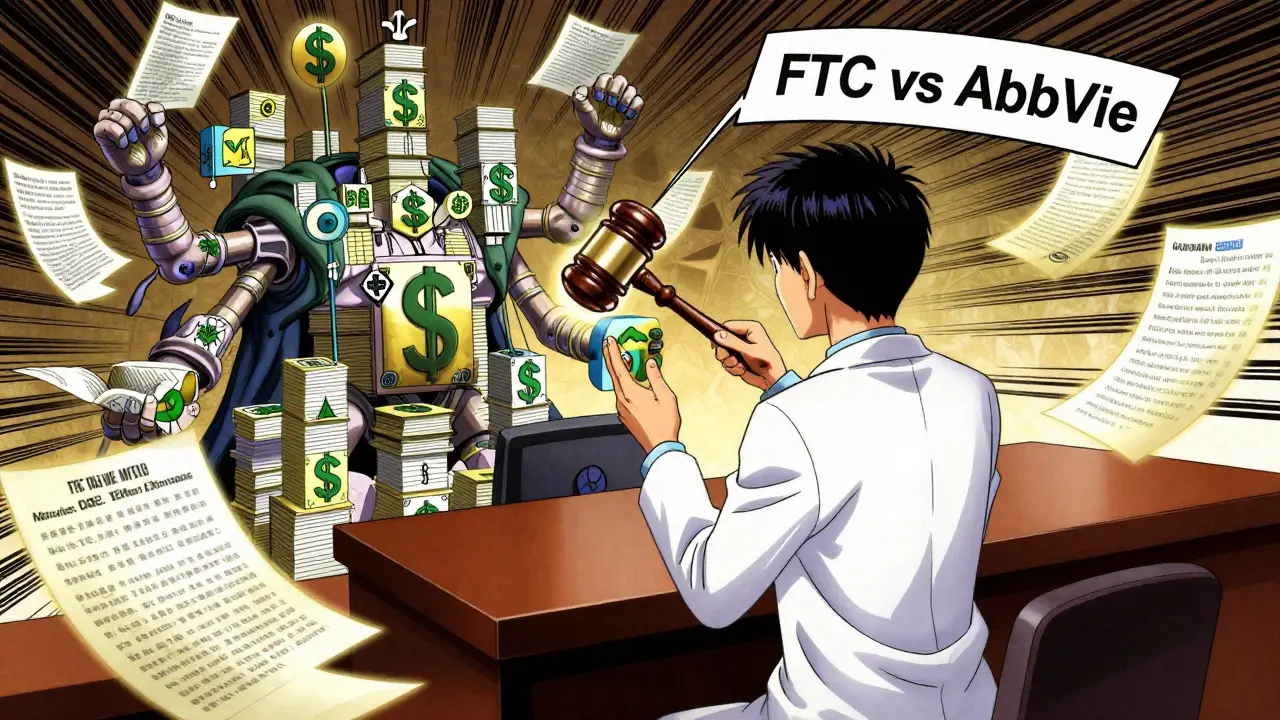
What’s Changing?
Pressure is building. In 2022, the U.S. Federal Trade Commission sued AbbVie over Humira’s patent strategy, calling it an illegal monopoly. The Inflation Reduction Act now lets Medicare negotiate prices for the most expensive drugs-something that could cut the incentive to evergreen. Europe is stricter. The EMA now requires proof of “significant clinical benefit” before granting extra exclusivity. Canada and Australia have tightened rules on product hopping. But change moves slowly. Companies still file hundreds of patents. Courts still side with them. And generics still struggle to break through. The biggest hurdle? The cost of fighting. A generic maker can’t afford to challenge 247 patents. Even if they win one, the next one pops up. It’s a war of attrition-and the big companies have all the ammo.What Patients Can Do
You can’t stop patent filings. But you can fight back:- Ask your doctor if a generic version exists-even if your prescription says the brand name. Sometimes, the same pill is sold under a different label.
- Check drug pricing tools like GoodRx or RxSaver. Prices vary wildly between pharmacies.
- Support policy changes. Contact your representatives. Ask them to back legislation that limits evergreening.
- If you’re on a long-term drug, ask if there’s a cheaper alternative with the same effect. Sometimes, switching brands isn’t necessary.
The Future of Evergreening
The next frontier? Biologics. These are complex drugs made from living cells-like Humira. They’re harder to copy than pills. That’s why companies are pouring money into “biosimilars,” which are cheaper versions of biologics. But even here, evergreening is adapting. Companies are patenting delivery devices, storage methods, and even genetic tests that predict who responds to the drug. If you need a test to prove you’re eligible, and only the brand offers it? That’s the new barrier. Nanotechnology and personalized medicine are next. Patent a drug that’s tailored to your DNA? That could mean a new 20-year clock for every patient. The game is evolving. But the goal hasn’t changed: keep the money flowing, even when the science doesn’t.Is evergreening illegal?
No, it’s not illegal-but it’s heavily criticized. Most evergreening tactics exploit legal loopholes in patent and drug approval systems. Courts often uphold these patents because they meet technical requirements, even if they offer no real medical benefit. However, regulators like the FTC and the European Medicines Agency are starting to challenge them as anti-competitive.
How long can a drug stay protected through evergreening?
Typically, the original patent lasts 20 years. But with evergreening, total protection can stretch to 30, 40, or even 50+ years. For example, AstraZeneca extended protection on six key drugs by over 90 years combined. AbbVie’s Humira was protected for nearly 20 years before generics arrived.
Do evergreened drugs work better than generics?
Almost never. Studies show that 90% of evergreening modifications offer no meaningful clinical advantage. A new capsule shape, a different dosage frequency, or a combo pill doesn’t make a drug more effective. Patients often pay more for the same outcome.
Why don’t generic companies just copy the drug?
They can’t legally until all patents expire. Even then, companies use patent thickets-hundreds of overlapping patents-to make it too expensive and risky for generics to enter. Legal battles can cost millions. Many generic makers simply give up.
What’s being done to stop evergreening?
The U.S. FTC sued AbbVie over Humira’s patent strategy. The Inflation Reduction Act allows Medicare to negotiate prices on high-cost drugs. The EU now requires proof of real clinical benefit for new patent extensions. Australia and Canada have cracked down on product hopping. But enforcement is inconsistent, and lobbying by pharmaceutical companies remains strong.


Janice Holmes
December 29, 2025This is pure, uncut corporate greed wrapped in a lab coat. They're not curing diseases-they're playing Monopoly with people's lives. Nexium? Same molecule as Prilosec, just repackaged like a $200 bottle of water at a concert. And Humira? $40 million a day? That's not capitalism-that's a heist with a FDA stamp of approval. I swear, if I had a dollar for every time a pharma exec said 'innovation,' I could pay for my insulin out of pocket. This isn't a system failure. It's a feature.
Alex Lopez
December 30, 2025Let’s be clear: this isn’t innovation. It’s litigation arbitrage. The Hatch-Waxman Act was a noble compromise-but it assumed rational actors. Instead, we got patent lawyers with spreadsheets. The FDA’s 'technically new' standard is a loophole wide enough to drive a Humira delivery truck through. And yes, the FTC’s lawsuit against AbbVie? Long overdue. But unless we redefine 'significant clinical benefit' to mean 'actually helps more than the old version,' we’re just rearranging deck chairs on the Titanic. Also: 🤦♂️
Gerald Tardif
January 1, 2026I get why this happens. Pharma R&D is brutal. But the fact that tweaking a pill’s coating can lock patients out of affordable care for decades? That’s not business. That’s betrayal. I’ve seen people choose between insulin and rent. I’ve watched friends cry over co-pays for drugs that haven’t changed since 2003. There’s a better way. We need to reward real innovation-not legal loopholes. Maybe we start by making patent extensions contingent on actual patient outcomes, not just paperwork. We can fix this. We just have to stop pretending it’s okay.
Monika Naumann
January 1, 2026Western nations have become soft. They allow foreign corporations to exploit their own legal systems. In India, we produce 80% of the world’s generic medicines because we understand that medicine is a right, not a profit center. The U.S. system is not broken-it is intentionally designed to enrich shareholders at the cost of human life. The fact that you call this 'legal' proves how far you have fallen. We do not patent life. We do not monetize survival. You must change your laws-or be left behind by the moral tide.
Elizabeth Ganak
January 2, 2026My dad’s on Humira. We paid $5k/month before generics. I didn’t even know this was happening until I started digging. It’s wild how no one talks about it. I just thought the drug was expensive because it’s 'special.' Turns out it’s just the same stuff in a fancier bottle. I’m so mad. But also… kind of hopeful? Like, if we all find out, maybe we can push back. Anyone know good groups to join? I want to help.
Nicola George
January 3, 2026So let me get this straight… they make a drug, wait 20 years, then slap on a new capsule and call it a 'breakthrough'? And we’re supposed to be impressed? 😒 Meanwhile, people in South Africa are rationing insulin because they can’t afford the brand-name version. The whole thing’s a circus. And the worst part? We’re all paying for the tickets. I’m not even mad. I’m just… tired.
Raushan Richardson
January 5, 2026Okay, but what if we flipped the script? What if instead of punishing generics, we rewarded the companies that actually innovate? Like, tax breaks for real breakthroughs, and fines for evergreening? We could fund real R&D without letting them milk the system dry. Also-seriously, if your drug hasn’t improved patient outcomes in 15 years, maybe it’s time to let go. We can do better. And we WILL.
Robyn Hays
January 6, 2026I love how this post breaks down the tactics-product hopping, patent thickets, orphan drug extensions. It’s like watching a heist movie where the villains are patent attorneys. But here’s the kicker: the most dangerous part isn’t the patents themselves. It’s the silence. No one talks about this. Not in doctor’s offices. Not on TV. Not even in pharmacy waiting rooms. We’re all just… nodding and paying. And that’s the real tragedy. Knowledge is power, but awareness is the first step to rebellion.
Liz Tanner
January 7, 2026Every single one of these evergreening tactics exploits a gap between legal technicality and medical ethics. And the worst part? The FDA doesn’t require proof of clinical improvement-only that the product is 'new.' That’s not regulation. That’s negligence dressed up as procedure. We need mandatory post-market outcome studies for all patent extensions. If it doesn’t improve survival, reduce hospitalizations, or enhance quality of life-it shouldn’t get a new patent. Simple. Fair. Necessary.
Babe Addict
January 8, 2026Look, you guys are missing the point. This isn’t evergreening-it’s capitalism. If you can patent a color change and make billions, you’re a genius, not a villain. The system rewards efficiency. You want cheaper drugs? Then stop whining and build your own pharma company. Or move to Canada. Or stop taking the meds. The market works. Your outrage is just emotional labor. The patents are legal. The profits are real. Get over it.
Satyakki Bhattacharjee
January 9, 2026Everything in this world is a cycle. The rich make laws. The poor pay. The medicine is just a symbol. The real disease is greed. When men forget that life is sacred, they turn pills into gold. And the world becomes a graveyard of numbers. We must return to truth. Not patents. Not profits. But humanity.