
Smoking Medication Interaction Calculator
Select medications you're currently taking that may be affected by smoking
Personalized Risk Assessment
Risk Level:
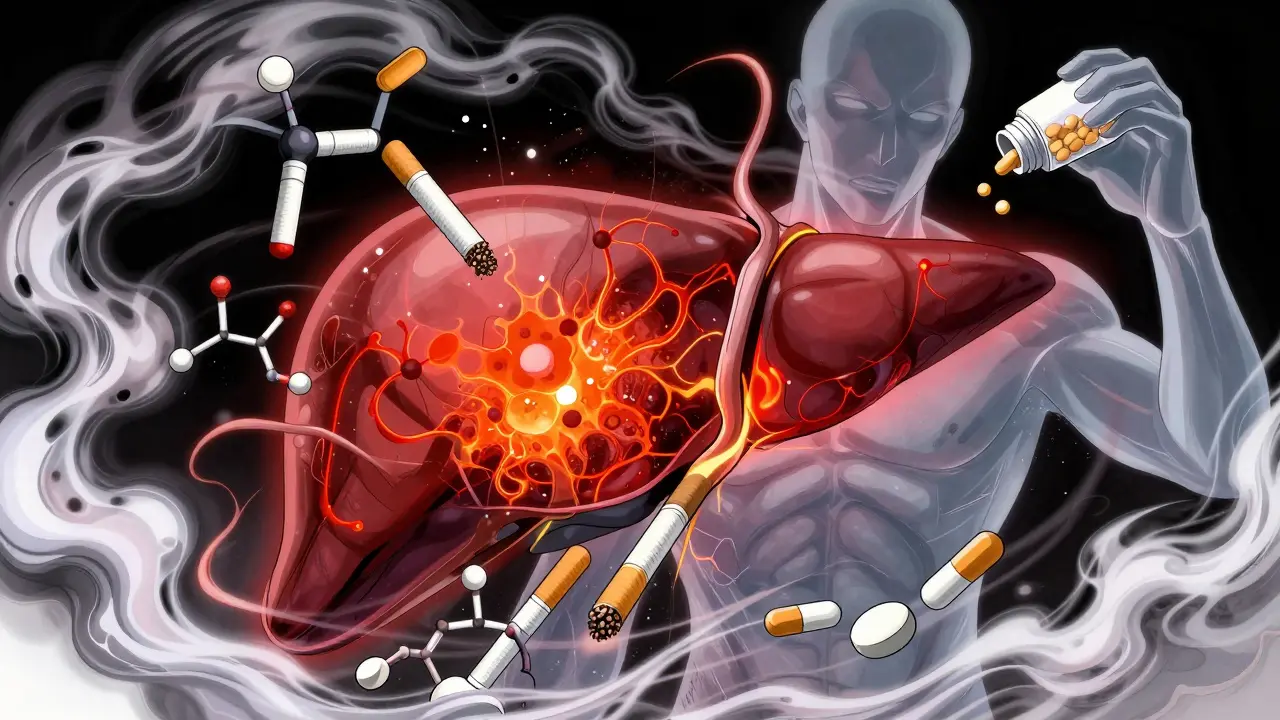
When you smoke, you’re not just exposing your lungs to tar and nicotine. Your liver is also getting a constant signal to work harder-faster. That’s because the chemicals in cigarette smoke trigger enzymes that break down medications before they can do their job. For many people, this means their prescriptions stop working the way they should, sometimes without them ever realizing why.
How Smoking Changes How Your Body Handles Medicine
Tobacco smoke doesn’t just irritate your airways-it rewires your body’s drug-processing system. The key players here are enzymes called cytochrome P450, especially CYP1A2. These are the liver’s main workhorses for breaking down drugs. When you smoke regularly, chemicals like polycyclic aromatic hydrocarbons bind to receptors in your liver cells and tell them to make more of these enzymes. The result? Drugs get cleared out of your bloodstream too quickly.
This isn’t a minor effect. Studies show smokers can clear caffeine-often used as a marker for CYP1A2 activity-30% to 50% faster than non-smokers. That same mechanism applies to many prescription drugs. For some, it means you need a higher dose just to feel the same effect. For others, it means your meds stop working entirely.
Medications That Are Heavily Affected
Not all drugs are impacted the same way. Some are barely touched. Others? They’re dramatically altered. The most affected are those metabolized primarily by CYP1A2. Here’s what happens with the most common ones:
- Theophylline (used for asthma and COPD): Smokers clear this drug 58% to 100% faster. Half-life drops from 8 hours to just 3 hours. Without a dose increase, the drug becomes useless. Many patients end up back in the ER because their inhaler isn’t working-and no one connected it to smoking.
- Clozapine (for treatment-resistant schizophrenia): Smokers need up to 50% higher doses to reach the same blood levels. When they quit, levels can spike dangerously high. The FDA has documented over 140 cases of clozapine toxicity after smoking cessation, mostly within two weeks.
- Olanzapine (another antipsychotic): Clearance increases by 98%. Smokers often have 12% lower drug levels than non-smokers on the same dose.
- Duloxetine (for depression and nerve pain): Metabolism speeds up by 30-40%. Patients report worsening symptoms even when taking their pills as prescribed.
- Pioglitazone (for type 2 diabetes): Smokers may need 20-30% higher doses. When they quit, blood sugar can crash unexpectedly.
- Mexiletine (for heart rhythm problems): Clearance jumps by 25%, and half-life drops by 36%. This can lead to dangerous arrhythmias if not adjusted.
On the flip side, drugs like SSRIs metabolized by CYP2D6-such as fluoxetine or sertraline-see little to no change. But if a drug uses CYP1A2 even as a secondary pathway, like methadone or acetaminophen, there’s still a measurable impact.
The Hidden Danger: Quitting Smoking
Most people think the problem ends when they stop smoking. But the real risk often starts then.
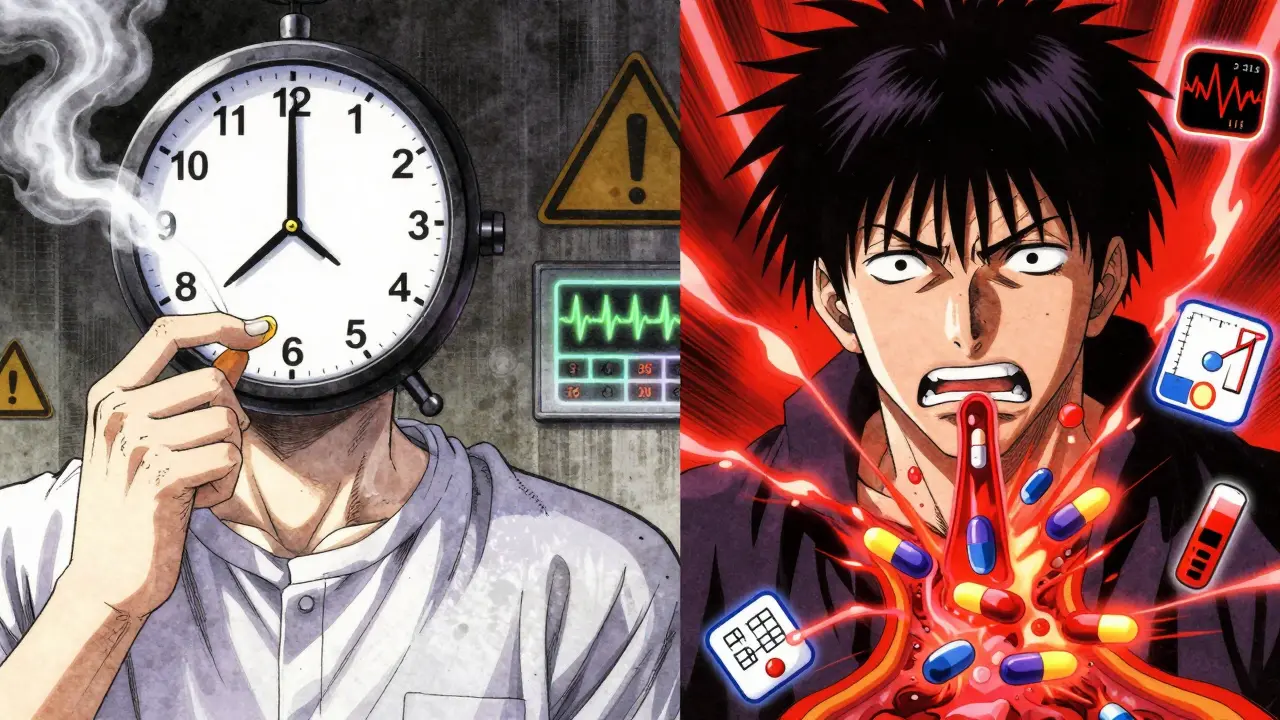
When you quit, your enzyme levels don’t stay high. They drop. Fast. Within 72 hours, CYP1A2 activity begins to normalize. By day 14, it’s back to non-smoker levels. But your medication dose? It hasn’t changed.
That’s when toxicity happens. A patient on clozapine who quits smoking might go from stable to seizures in under two weeks. Someone on theophylline can develop nausea, tremors, and heart palpitations because their blood levels suddenly double. Pharmacists on Reddit have reported multiple hospitalizations because doctors never warned patients about this.
Dr. Neal Benowitz from UCSF puts it bluntly: “The period right after quitting smoking is one of the most dangerous times for drug toxicity.” Yet, in a 2022 survey, only 37% of primary care doctors routinely check smoking status when prescribing theophylline or clozapine.
What You Should Do
If you smoke and take any of these medications, here’s what matters:
- Know your meds. Check if your drug is metabolized by CYP1A2. Look for “CYP1A2 substrate” in the prescribing information. If you’re unsure, ask your pharmacist.
- Be honest about smoking. Tell every doctor and pharmacist you see-even if it’s for something unrelated. Your smoking status changes how your body handles every drug.
- If you quit, expect changes. Don’t assume your dose is still right. Contact your prescriber within 3-7 days of quitting. You may need a dose reduction of 25-50%, depending on the drug.
- Monitor for symptoms. For antipsychotics: increased sedation, confusion, dizziness. For theophylline: nausea, rapid heartbeat, seizures. For diabetes meds: low blood sugar without changes in diet or activity.
Some hospitals now use electronic alerts in their systems to flag patients on high-risk drugs who smoke. One study found that when institutions started documenting smoking status in their EHRs, adverse drug events dropped by 42%.
It’s Not Just About Dose
Genetics also play a role. Some people have a CYP1A2 gene variant (CYP1A2*1F) that makes them more sensitive to smoking’s effects. Smokers with this variant can have up to 30% greater enzyme induction than others. That’s why two people smoking the same amount might need very different doses.
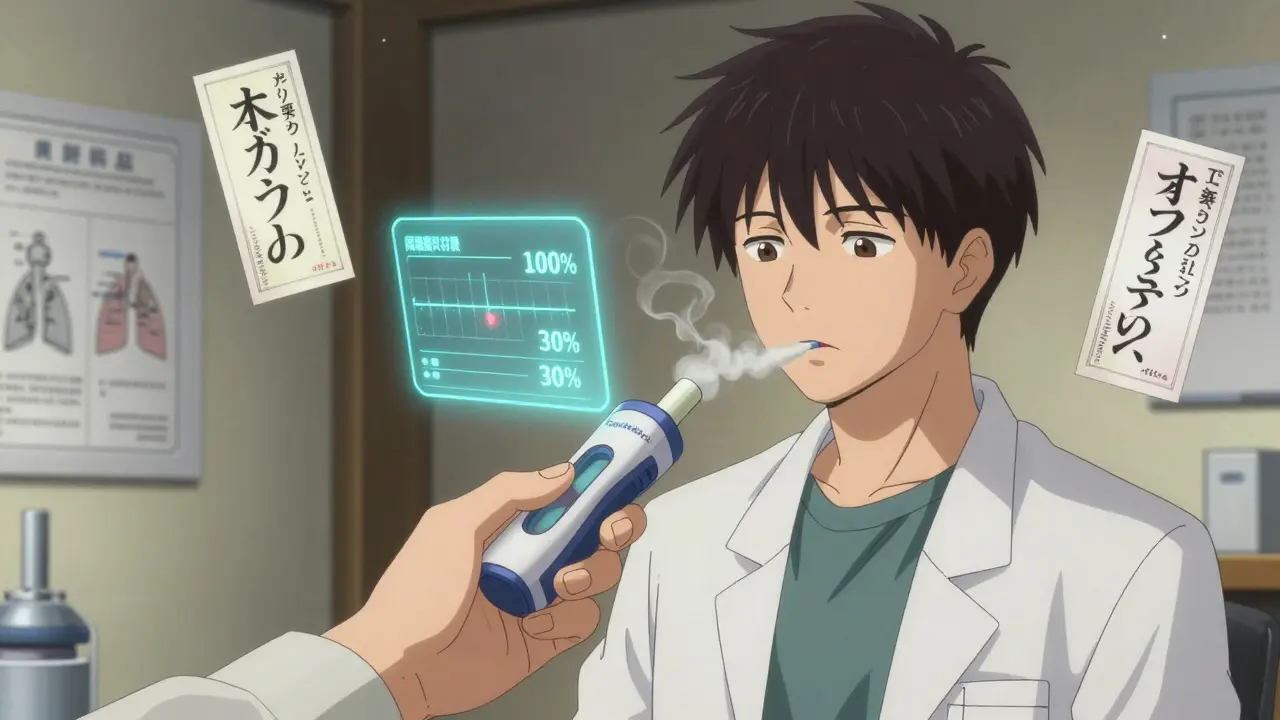
Now, there’s a new tool: a simple caffeine breath test called SmokeMetrix®, approved by the FDA in early 2023. It measures how fast your body processes caffeine to estimate your CYP1A2 activity. It’s not yet routine, but it’s a game-changer for precision dosing.
Why This Matters More Than You Think
Over 34 million adults in the U.S. smoke. Among people with schizophrenia, nearly half do. In COPD patients, it’s nearly 30%. These are the exact groups taking the most drugs affected by smoking.
When a diabetic quits smoking and their A1C drops from 7.8% to 5.9% without changing anything else, that’s not a miracle-it’s a warning. Their body is now processing their diabetes medicine too well. They’re at risk for hypoglycemia.
And the cost? The U.S. healthcare system spends $2.3 billion a year treating preventable drug reactions tied to smoking status changes, according to the Agency for Healthcare Research and Quality.
This isn’t theoretical. It’s happening every day-in clinics, ERs, and homes. Someone’s asthma inhaler isn’t working. Someone’s antipsychotic is making them dizzy. Someone’s blood sugar crashes. And no one connects it to cigarettes.
It’s time we stop treating smoking as just a bad habit-and start treating it as a pharmacological variable. Because when it comes to your meds, your smoke isn’t just in your lungs. It’s in your bloodstream, your liver, and every pill you take.
Does smoking affect all medications?
No, not all medications are affected. Only those primarily broken down by enzymes that smoking activates-mainly CYP1A2, CYP2E1, and some UGTs. Common examples include theophylline, clozapine, olanzapine, duloxetine, and pioglitazone. Drugs like sertraline, metoprolol, and most antibiotics are not significantly impacted.
How long after quitting smoking do drug levels change?
Enzyme activity begins dropping within 72 hours of quitting. The biggest changes happen between days 3 and 14. By 2 to 4 weeks, enzyme levels return to those of a non-smoker. This is why dose adjustments should start within the first week after quitting, not weeks later.
Can I just increase my dose if I smoke?
Not without medical supervision. Increasing your dose on your own can be dangerous. Some medications have narrow therapeutic windows-too much can cause toxicity. Always consult your doctor or pharmacist before changing your dose. They may recommend therapeutic drug monitoring (blood tests) to guide adjustments.
What should I do if I’m trying to quit smoking?
Let your prescriber know your quit date. Ask if your medications are affected by smoking. You may need a dose reduction 3 to 7 days after quitting. Monitor for new side effects-like dizziness, nausea, low blood sugar, or unusual sleepiness-and report them immediately. Don’t wait for your next scheduled appointment.
Is there a test to check if smoking is affecting my meds?
Yes. A caffeine metabolism test called SmokeMetrix® measures how fast your body clears caffeine, which directly reflects CYP1A2 activity. It’s now FDA-approved and available in some clinics. Your pharmacist can order it if you’re on a high-risk medication and want precise dosing guidance.
Why don’t doctors always talk about this?
Many doctors aren’t trained to think of smoking as a drug interaction. It’s often seen as a lifestyle issue, not a pharmacological one. But guidelines from the American Society of Health-System Pharmacists and the WHO now clearly state that smoking status must be documented and considered with every prescription. You may need to bring it up first.


calanha nevin
February 1, 2026Smoking isn't just a habit-it's a pharmacokinetic wildcard. I've seen patients on clozapine crash after quitting because no one told them to recheck levels. This isn't theoretical. It's life-or-death dosing math. If you're on any antipsychotic, theophylline, or even duloxetine, your smoke status changes everything. Document it. Track it. Adjust it. No excuses.
Pharmacists know this. Doctors? Not so much. You have to be your own advocate.
Sheila Garfield
February 1, 2026My dad smoked for 40 years and was on theophylline for COPD. When he quit cold turkey, he ended up in the ER with a racing heart. No one warned him. The doctor just said 'maybe it's the quitting.' We spent weeks figuring out why. This post should be mandatory reading for every prescriber.
Also, the caffeine test thing? Brilliant. Why aren't we doing this routinely?
Lisa McCluskey
February 1, 2026It's wild how we treat smoking like a moral failing instead of a biological variable. Your liver doesn't care if you 'shouldn't' smoke-it just responds to the chemicals. The fact that we don't routinely test CYP1A2 activity in high-risk patients is a systemic failure. Not everyone can quit. But everyone deserves safe meds.
Let's stop blaming and start dosing right.
Shawn Peck
February 1, 2026Bro. I smoked and took Zoloft. Nothing happened. So this whole thing is fake. Probably just drug company fearmongering to sell more tests. You guys are overcomplicating simple stuff.
My cousin smoked and took insulin. Fine. So chill out.
Jason Xin
February 2, 2026Shawn, your cousin taking insulin is like saying 'my dog eats kibble so all dogs can eat cake.'
Insulin isn't metabolized by CYP1A2. That's like complaining your toaster doesn't brew coffee. The fact you're this oblivious is the real problem. This isn't about 'chilling out.' It's about not dying because your doctor didn't do their job.
Kelly Weinhold
February 3, 2026Okay but imagine being someone with schizophrenia who finally quits smoking after years of struggle-only to get hospitalized because your meds suddenly become too strong? That’s the emotional toll no one talks about.
It’s not just about the science. It’s about people trying to get better and the system still tripping them up. We need better protocols. Better warnings. Better care. Not just more tests.
Also, shoutout to pharmacists-they’re the real MVPs here. They’re the ones catching this before it blows up.
Let’s make this common knowledge. Like seatbelts. Like handwashing. Like checking your meds.
Kimberly Reker
February 4, 2026I work in a clinic. We started flagging smoking status in EHRs for anyone on clozapine or theophylline. Within 6 months, we had zero hospitalizations from post-quit toxicity. Zero.
It’s not hard. Just ask. Just document. Just adjust.
Also, the SmokeMetrix test? I ordered one for a patient last month. Took 10 minutes. Cost $45. Saved her from a seizure. Worth every penny.
April Allen
February 6, 2026The CYP1A2 induction phenomenon is a textbook example of xenobiotic-driven phenotypic plasticity. The polycyclic aromatic hydrocarbons in tobacco smoke act as ligands for the aryl hydrocarbon receptor (AhR), triggering transcriptional upregulation of CYP1A2 via the xenobiotic response element (XRE). This isn't just metabolism-it's epigenetic reprogramming of hepatic enzyme expression.
What's more, the half-life shift from 8 to 3 hours for theophylline represents a 167% increase in clearance rate, which exceeds the therapeutic window for most patients on standard dosing. The pharmacodynamic consequences are nonlinear and potentially catastrophic.
And yet, we still treat this as a lifestyle footnote rather than a core pharmacological variable. The disconnect between molecular biology and clinical practice is staggering. We're treating symptoms while ignoring the mechanism. That's not medicine. That's negligence dressed in white coats.
Diana Dougan
February 7, 2026So let me get this straight. I smoke, I take pills, I quit, I almost die. But if I never told my doctor I smoked? It's my fault? Cool. So now I have to be a pharmacologist AND a smoker? Thanks for the guilt trip.
Also, SmokeMetrix? Sounds like a scam. Next they'll sell us a 'vape metabolism analyzer.'
Why don't they just make drugs that don't care if you smoke? Oh right. Profit.
Rohit Kumar
February 7, 2026In India, smoking is seen as a personal choice, and doctors rarely ask about it. I know a man who took clozapine for 12 years, smoked 20 cigarettes a day, quit cold turkey, and had seizures within 10 days. His doctor said, 'Maybe you got stressed.'
This isn't just an American problem. It's a global blind spot. We need global guidelines. Not just in hospitals, but in medical schools. We must teach that smoke is a drug interaction-not a moral judgment.
And yes, the caffeine test is brilliant. It's simple. It's accurate. It's cheap. Why isn't it standard everywhere?