
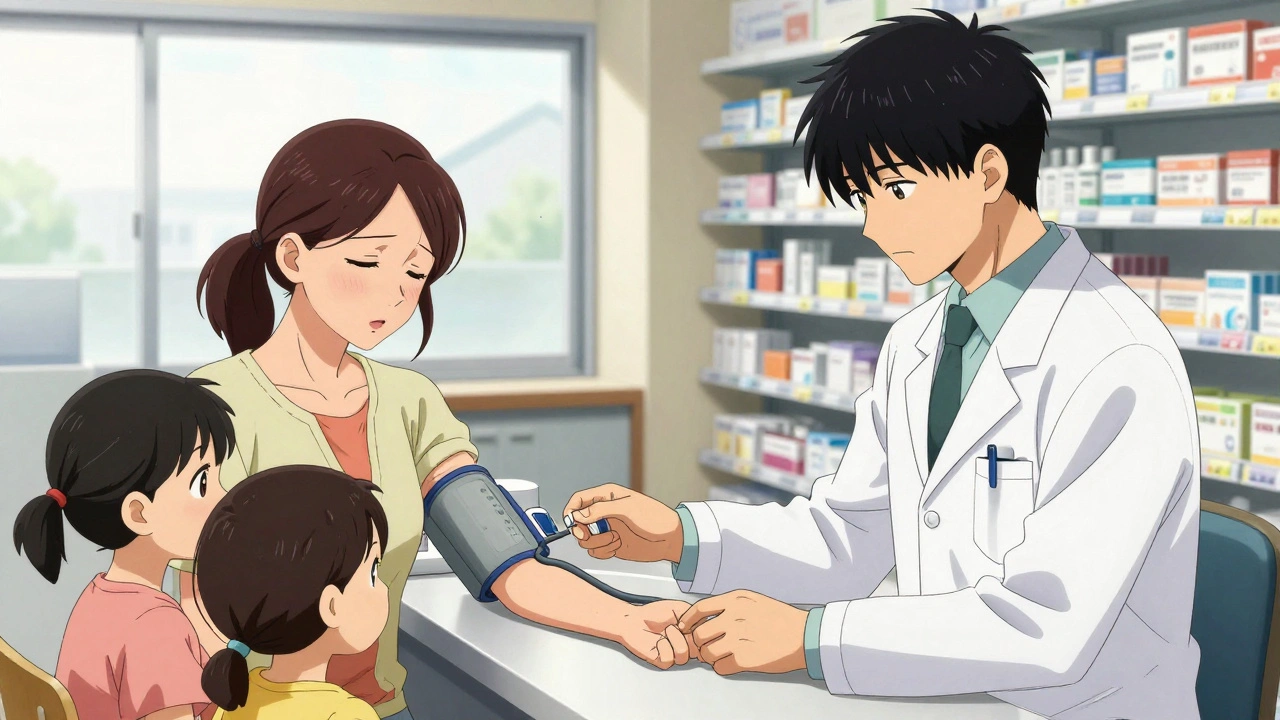
For decades, pharmacists were seen as the people who handed out prescriptions - counting pills, checking for interactions, and answering quick questions. But that’s not all they do anymore. Across the U.S., pharmacists are now legally allowed to do far more: swap medications, start new treatments, adjust doses, and even prescribe certain drugs - all without needing a doctor’s signature each time. This shift isn’t just a trend. It’s a response to real problems: too many people without access to doctors, too many rural communities without clinics, and too many patients stuck waiting for simple medication changes.
What Exactly Is Pharmacist Substitution Authority?
Pharmacist substitution authority means a pharmacist can legally change or replace a medication under specific rules set by state law. It’s not about guessing or improvising. It’s a structured, regulated process with clear boundaries. The most common form is generic substitution. In every state, if a doctor writes a prescription for a brand-name drug like Lipitor, the pharmacist can give you the generic version, atorvastatin, unless the doctor specifically says "dispense as written." But there’s more. Some states allow therapeutic interchange. That’s when a pharmacist can switch you from one drug to another in the same class - say, from one statin to another - even if they’re not chemically identical. Only three states - Arkansas, Idaho, and Kentucky - have full therapeutic interchange laws on the books. In Kentucky, the doctor must write "formulary compliance approval" on the prescription. In Idaho and Arkansas, they must write "therapeutic substitution allowed." And in all three, the pharmacist has to tell the original prescriber and make sure the patient knows what changed.
Prescription Adaptation and Collaborative Practice Agreements
Then there’s prescription adaptation. This lets pharmacists tweak an existing prescription - maybe change the dose, switch the timing, or add a refill - without calling the doctor. It’s especially helpful for people in rural areas who can’t easily drive to a clinic. If your blood pressure meds need adjusting after a check-up, your pharmacist might be able to handle it right then and there.
Even more powerful are Collaborative Practice Agreements (CPAs). These are written agreements between pharmacists and physicians (or other providers) that outline exactly what the pharmacist can do. CPAs can cover everything from managing diabetes to giving flu shots to adjusting anticoagulants. All 50 states and D.C. allow CPAs, but how they’re used varies wildly. In some places, pharmacists still need a doctor’s approval for every change. In others, like Colorado and New Mexico, pharmacists operate under statewide protocols - meaning they can provide certain services without needing individual doctor agreements. This is where the trend is heading: less oversight, more autonomy.
States Leading the Way
Some states are pushing boundaries faster than others. Maryland lets pharmacists prescribe birth control to anyone over 18. Maine allows them to prescribe nicotine replacement therapy. California doesn’t use the word "prescribe" - instead, pharmacists "furnish" certain medications, which legally sidesteps some restrictions. In Washington and Oregon, pharmacists can prescribe and dispense naloxone (the opioid overdose reversal drug) without a prior prescription. These aren’t exceptions - they’re becoming models.
What’s driving this? Physician shortages. The Association of American Medical Colleges predicts a shortfall of 124,000 doctors by 2034. Meanwhile, there are over 270,000 licensed pharmacists in the U.S. - most of them in community pharmacies, easily accessible, often open evenings and weekends. Why not use them?
What Pharmacists Can and Can’t Do
Even in states with broad authority, there are limits. Pharmacists can’t treat cancer. They can’t order MRIs. They can’t perform surgery. Their authority is focused on medications and conditions that are well-understood and safe to manage with standardized protocols. Common areas include:
- Birth control and emergency contraception
- Nicotine replacement therapy
- Allergy and sinus medications
- Diabetes and hypertension management (under CPA)
- Flu, strep, and COVID-19 testing and treatment
- Naloxone distribution
Each state sets its own rules. Some require pharmacists to complete extra training. Others require patients to be over 18. Some mandate that pharmacists refer patients to a doctor if symptoms don’t improve within a few days. The rules aren’t the same everywhere - but they’re getting clearer.
Why This Matters for Patients
Imagine you’re a single mom in rural Iowa. Your blood pressure medicine ran out. The nearest clinic is 45 minutes away. You can’t take time off work. You’ve got two kids to care for. Under traditional rules, you’d wait - or worse, skip your meds. But if your pharmacist has authority under a CPA, they can refill your prescription, adjust the dose if needed, and even check your blood pressure right there in the pharmacy. No appointment. No wait. No extra cost.
This isn’t hypothetical. A 2023 study in the Journal of the American Pharmacists Association showed that when pharmacists managed hypertension under CPAs, patients’ blood pressure improved faster than those seeing only their doctors. And in states with pharmacist-prescribed birth control, unplanned pregnancies dropped by up to 30% in the first year.
The Big Hurdle: Paying for It
Here’s the catch: just because a pharmacist can do something doesn’t mean insurance will pay for it. Most private insurers and Medicare still don’t recognize pharmacists as providers. They’ll pay for the drug - but not for the time, the counseling, the follow-up, or the lab tests the pharmacist performed.
This is why the Ensuring Community Access to Pharmacist Services Act (ECAPS) is so important. If passed, ECAPS would require Medicare Part B to reimburse pharmacists for services like testing, vaccination, and chronic disease management. That single change could unlock billions in funding and push private insurers to follow suit. Right now, pharmacists are doing the work - but they’re doing it for free. That’s not sustainable.
Opposition and Concerns
Not everyone agrees with this expansion. The American Medical Association still argues that pharmacists don’t have the same training as physicians. They worry about patient safety and fragmentation of care. Some doctors fear pharmacists will overstep or miss serious symptoms.
But the data tells a different story. A 2024 review by the National Academy of Medicine found no increase in adverse events in states with expanded pharmacist authority. In fact, medication errors dropped in clinics where pharmacists were integrated into care teams. The real risk isn’t pharmacists doing too much - it’s them being underused.
Corporate pharmacies have pushed hard for these changes. But so have patient advocates, rural health groups, and public health officials. The goal isn’t to replace doctors - it’s to fill gaps where doctors can’t reach.
What’s Next?
In 2025 alone, 211 bills were introduced in 44 states to expand pharmacist scope. Sixteen of them became law. That’s momentum. More states are adopting statewide protocols. More pharmacists are getting certified in advanced practice. More insurers are starting to reimburse for clinical services.
The future of pharmacy isn’t just behind the counter. It’s in the exam room, on the phone, in the community. Pharmacists are becoming frontline providers - not because they want to be doctors, but because they’re the most accessible, trained professionals many patients have.
If you’ve ever walked into a pharmacy and been asked, "How are your meds working?" - that’s not small talk. That’s clinical care. And it’s only going to grow.


Dematteo Lasonya
December 5, 2025My grandma in rural Ohio gets her blood pressure meds adjusted at the pharmacy now. No more driving 40 miles just to see if her dose is right. Simple. Effective. Why aren’t we doing this everywhere?
Rudy Van den Boogaert
December 7, 2025I work in a community pharmacy and we’ve been doing CPA stuff for years. Patients love it. Docs love it when we catch their errors before they happen. It’s not replacing anyone-it’s just making the system work better. The real issue is insurance refusing to pay for the time we spend actually helping people.
Jessica Baydowicz
December 8, 2025Pharmacists are the unsung heroes of healthcare 🌟 I’ve had mine help me switch my anxiety med, explain side effects in plain English, and even remind me when my refill’s due. They’re not just pill counters-they’re your health hype squad. Let’s pay them like the pros they are!
Jordan Wall
December 9, 2025Oh great, now pharmacists are gonna be ‘clinical providers’? Next thing you know they’ll be doing MRIs and writing prescriptions for antidepressants while handing out lollipops 🤡 I mean, come on-how many years of med school do they even have? 2? 3? Lol. #OverqualifiedPharmacist
Gareth Storer
December 11, 2025So let me get this straight-we’re trusting the guy who works the drive-thru window with my antibiotics to manage my diabetes? Brilliant. Next, the barista will be doing my colonoscopy prep.
Libby Rees
December 12, 2025The data is clear: expanded pharmacist roles reduce hospitalizations and improve outcomes. The resistance isn’t about safety-it’s about turf. Physicians are trained to protect their domain, not necessarily the patient’s access. This isn’t a threat. It’s evolution.
Martyn Stuart
December 12, 2025Let’s be clear: pharmacists undergo rigorous training in pharmacotherapy, drug interactions, and patient counseling-often more than many primary care residents. In states with CPA programs, pharmacists complete additional certifications, often 200+ hours of clinical training. They’re not ‘just pharmacists’-they’re clinical specialists. And yes, insurance reimbursement is the real barrier-not competence.
Pavan Kankala
December 13, 2025They want pharmacists prescribing? That’s just the first step. Next thing you know, the government will be giving out vaccines from Walmart and letting Amazon bots diagnose your rash. This is how they control the population-slowly replace doctors with corporate-trained technicians. Wake up.
Gillian Watson
December 13, 2025Back in the UK we’ve had pharmacists doing minor ailment schemes for ages. Coughs, colds, UTIs-all handled without a GP. Saves the NHS millions. People don’t see it as a threat. They see it as sensible. Why is the US so resistant to common sense?
Shofner Lehto
December 14, 2025When my sister had a diabetic foot ulcer, her pharmacist was the one who caught the early signs of infection, adjusted her insulin, coordinated with her endocrinologist, and even drove her supplies to her house when she couldn’t get out. That’s not a pill counter. That’s healthcare. And we’re lucky to have them. The system needs to catch up.