
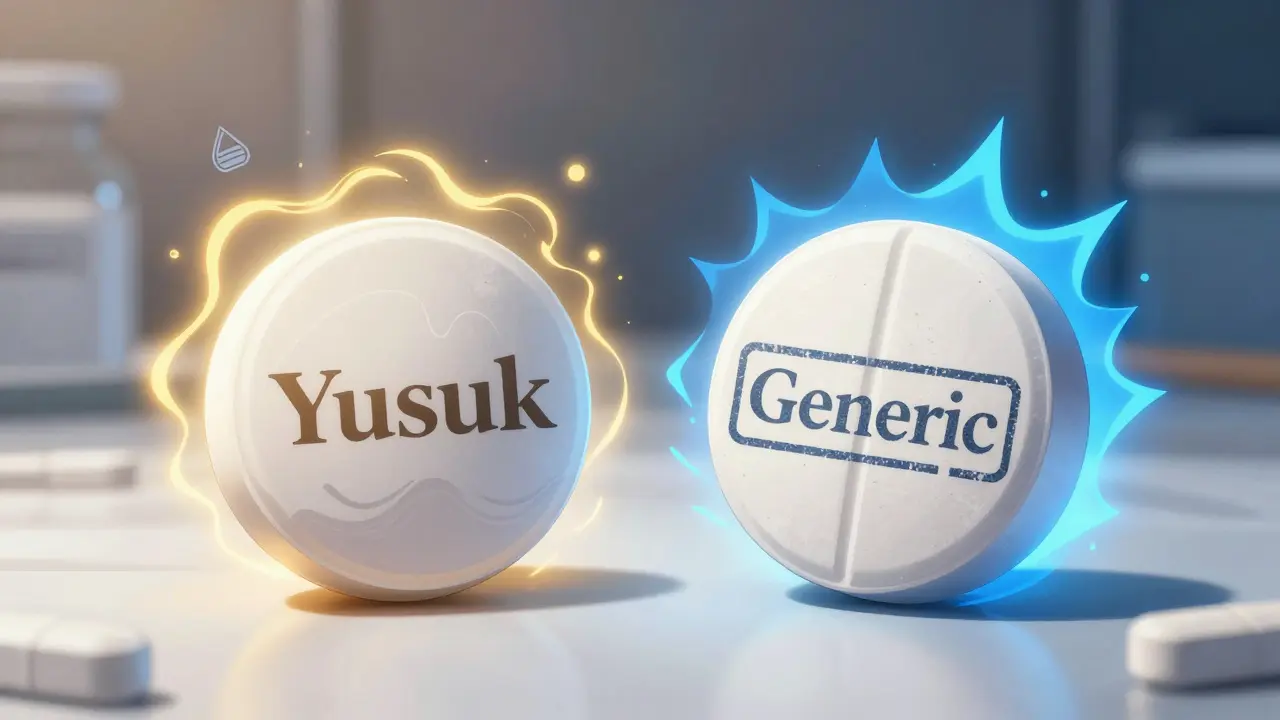
What if the pill you’re taking doesn’t change-but the label on it does-and suddenly, it stops working? It sounds impossible. But in real life, this happens more often than you think. Two identical pills, same active ingredient, same dosage, same manufacturer-except one says generic and the other says a well-known brand name. One works. The other doesn’t. Not because of chemistry. Because of perception.
Same Medicine, Different Mindset
You’ve probably been told that generic drugs are just as good as brand-name ones. And scientifically, that’s true. The FDA requires generics to have the same active ingredient, strength, dosage form, and route of administration as the original. They must also prove they’re absorbed into the body at the same rate and to the same extent. In lab tests, they’re indistinguishable. But here’s the catch: your brain doesn’t care about lab tests. A 2019 study in the European Journal of Public Health gave 72 people identical placebo pills. Half were told they were getting a brand-name drug. The other half were told they were getting a generic. Both groups believed they were taking real medication. After seven days, 54% of the people who thought they were on the generic stopped taking the pill. Only 33% of the brand-name group did. That’s a 64% higher dropout rate-just because of the label. Even more striking? The generic-labeled group reported more pain, more side effects, and were twice as likely to reach for over-the-counter painkillers to compensate. Their bodies reacted as if the drug wasn’t working-even though it wasn’t a drug at all.Placebo Power, Nocebo Trap
This isn’t just about trust. It’s about expectation. When you see a brand name you’ve seen on TV for years, your brain expects relief. That expectation triggers real biological changes-more endorphins, less stress hormones, reduced pain signals. That’s the placebo effect. But when you see the word generic, your brain often flips into nocebo mode: “This is cheap. It’s probably weaker. It might not work. It might even hurt me.” That fear activates the same stress pathways, making you feel worse-even if the pill is chemically identical. A 2016 study tested this with real ibuprofen and placebos. Participants took four types of pills: brand-name ibuprofen, generic ibuprofen, brand-name placebo, and generic placebo. The brand-name placebo reduced pain almost as much as the real generic ibuprofen. The generic placebo? Almost no pain relief at all. The label changed the outcome. Not the chemistry.Who’s Most Affected?
Not everyone reacts the same way. People with lower health literacy are hit hardest. In the same 2019 study, those with limited understanding of how drugs work had a 67% discontinuation rate when told they were on a generic-compared to 41% for those with higher health literacy. The label didn’t just confuse them; it scared them. Older adults, people managing chronic conditions like high blood pressure or diabetes, and those who’ve had bad experiences with medications before are also more likely to doubt generics. They’ve been told for years that “you get what you pay for.” And when a pill costs less, their brain assumes it’s less effective. Even doctors and pharmacists aren’t immune. A 2022 survey found that 63% of pharmacists had been asked by patients why they were being given a generic-and many had to explain, again and again, that it’s the same medicine.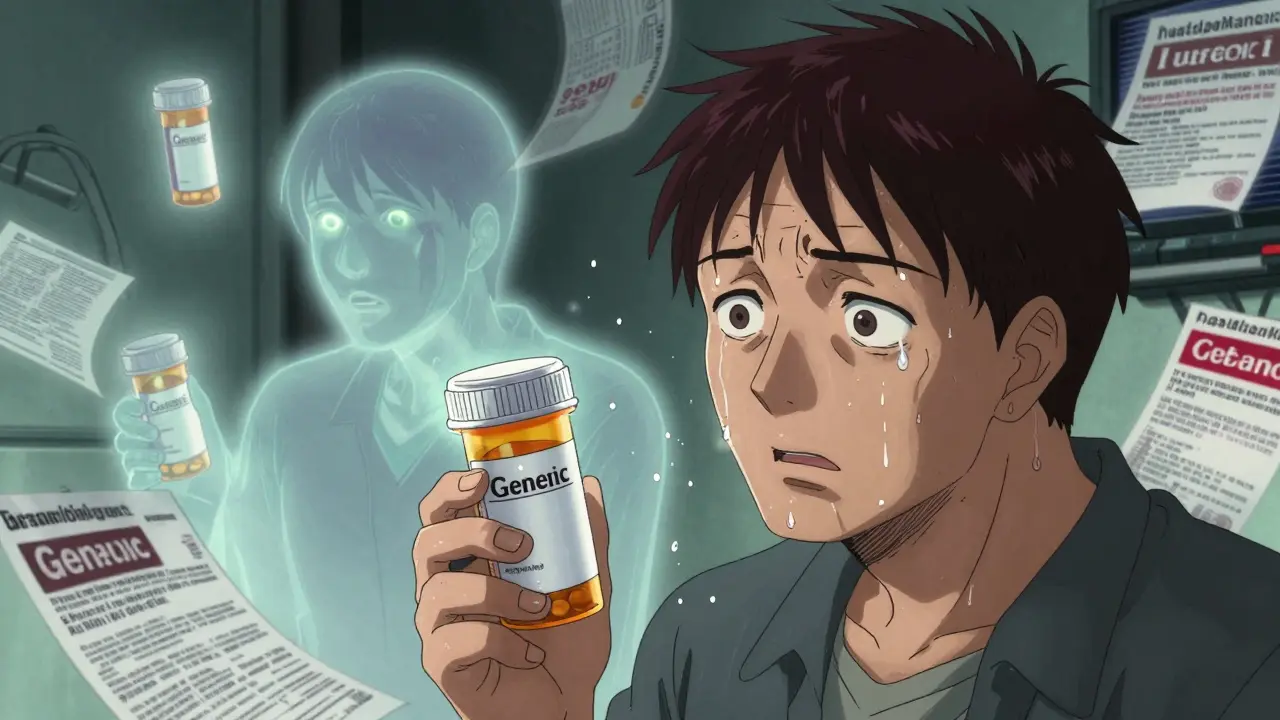
When Labels Lie
The problem isn’t just perception-it’s paperwork. A 2020 study analyzed 31 drug products and found that 100% of generic labels had differences from their brand-name counterparts. That’s not a typo. Every single one. Some differences are harmless: font size, color, inactive ingredients. But 12.9% of the labels had discrepancies that could be life-threatening. One generic version of a heart medication omitted a warning about dangerous interactions with grapefruit juice. Another left out a critical dosage adjustment for kidney patients. These aren’t mistakes. They’re gaps in regulation. Why? Because once a brand-name drug is approved, generic manufacturers don’t have to re-prove safety for every detail. They only need to match the active ingredient. The rest? They can copy, change, or omit-within legal limits. And over time, those small changes pile up. The result? A patient gets a new generic version, reads the label, and thinks, “This isn’t the same.” They’re not wrong. It’s not the same. Not on paper.Cost vs. Confidence
Generics save the U.S. healthcare system over $370 billion a year. That’s money that goes to hospitals, research, and lower premiums. But if patients stop taking them because they don’t believe they work, those savings vanish. In chronic conditions like hypertension, adherence is everything. The World Health Organization says only about half of people take their long-term meds as prescribed. With generics, that number drops even further-especially when the label says “generic” and the patient has been conditioned to distrust it. A 2023 Kaiser Family Foundation survey found that only 56% of Americans believe generics are “as good as” brand-name drugs. That’s down from 62% in 2018. Trust is slipping. And when trust slips, so does adherence.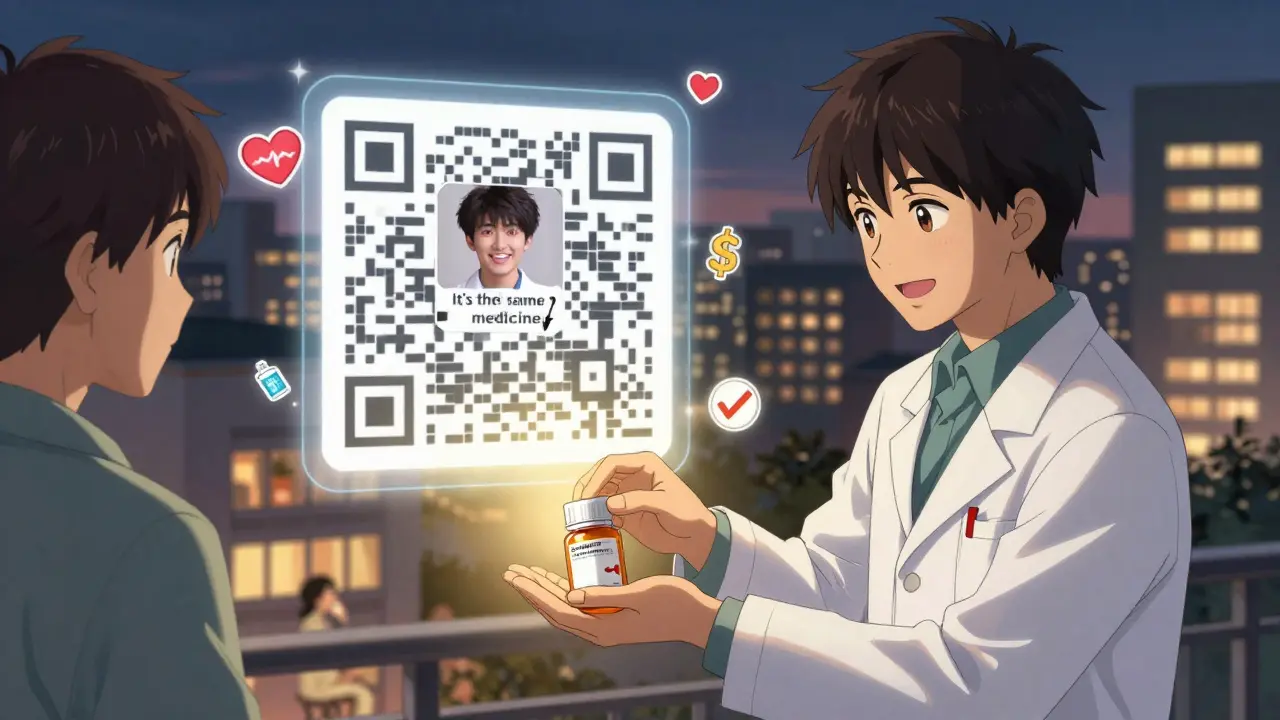
What’s Being Done?
Some solutions are already working. The FDA launched “It’s the Same Medicine” in 2020. It’s a simple campaign-posters, videos, brochures-that shows side-by-side comparisons of brand and generic pills with the same active ingredient. In pilot programs, patient concerns dropped by 28%. Another fix? Changing the label itself. A 2023 trial added the phrase “therapeutically equivalent to [brand name]” to generic packaging. Result? Discontinuation rates fell from 52% to 37%. Just five extra words made a measurable difference. The Generic Pharmaceutical Association also launched “Generic You Can Count On” in January 2024-a $50 million education push aimed at rebuilding trust. Hospitals are training staff to explain generics proactively, not reactively. Some even include a QR code on the bottle that links to a video from the pharmacist explaining why it’s safe.What You Can Do
If you’re prescribed a generic:- Ask your pharmacist: “Is this the same as the brand-name version?” Don’t be embarrassed. They’ve heard it a thousand times.
- Check the active ingredient on the label. If it matches the brand, you’re getting the same medicine.
- If you feel worse after switching, don’t assume it’s the drug. Ask your doctor if it could be psychological. Sometimes, just knowing you’re on a generic can make you feel worse.
- Use the FDA’s “Drugs@FDA” database to look up both versions. See for yourself that the active ingredient is identical.
- Stick with the same generic manufacturer if you can. Even though the active ingredient is the same, different inactive ingredients can affect how the pill feels in your stomach or how quickly it dissolves.
- Don’t switch generics unless your doctor says so. Each switch-even within generics-can trigger a nocebo effect.
Jasmine Bryant
January 23, 2026I never thought about how the word 'generic' could make me feel worse. I’ve been taking generic blood pressure meds for years and never questioned it-but now I wonder if my headaches were all in my head. That study with the placebo pills? Chilling. I’m gonna check my bottle next time I refill.
Liberty C
January 24, 2026Of course the uneducated masses believe generics are inferior. They think ‘cheap’ means ‘low quality’-just like they think organic kale is a lifestyle and not a leafy green. This isn’t a medical issue. It’s a cultural failure of critical thinking. The FDA doesn’t need more posters. They need to stop coddling people who think their mind is a magic wand.
Brenda King
January 26, 2026So many people don’t realize how powerful the mind is. I work in a clinic and I’ve seen patients cry because they were switched to a generic. Not because it didn’t work-but because they thought it wouldn’t. A simple conversation, a printed comparison chart, even a smile when handing over the bottle-it changes everything. We’re not just dispensing pills. We’re dispensing hope.
Rob Sims
January 27, 2026Wow. So the real problem here is that people are too stupid to read a label? Let me guess-next you’ll tell us that people think their iPhone charger is fake because it doesn’t have the Apple logo. This isn’t science. It’s a cry for hand-holding. Maybe if people stopped buying into the ‘brand = better’ fairy tale, we wouldn’t need a $50 million ad campaign to fix what’s basically a cognitive bias.
Chiraghuddin Qureshi
January 28, 2026Same medicine, different mind? This is why in India we say ‘dil se lena’-take it from the heart. Even our grandmas know: belief matters more than the bottle. I’ve seen people refuse generics because they think ‘made in USA’ is better. But here? We trust the science, not the logo. 🙏
Kenji Gaerlan
January 28, 2026generic pills are the worst. i switched to one and felt like garbage for a week. turned out it was the filler or something. now i only take brand. worth the extra cash.
Oren Prettyman
January 29, 2026It is, of course, an incontrovertible fact that the psychological phenomenon known as the nocebo effect, which is the inverse of the placebo effect, has been empirically validated across multiple controlled clinical trials, including those published in peer-reviewed journals such as the European Journal of Public Health and the Journal of Clinical Psychopharmacology, and yet, despite this overwhelming body of evidence, a significant proportion of the lay public continues to exhibit a persistent and irrational aversion to generic pharmaceuticals, a behavior which, when analyzed through the lens of behavioral economics, may be interpreted as a manifestation of status quo bias and loss aversion, compounded by the pervasive influence of pharmaceutical marketing and the commodification of health.
Malik Ronquillo
January 31, 2026My grandma took a generic statin and swore it made her dizzy. She switched back to the brand-and boom, fine. Turned out the generic had a different dye. Not the active ingredient. Just the coating. She felt better because she thought she was getting the ‘real’ one. So yeah… the label matters. Not because it’s different. But because she believed it was.
Daphne Mallari - Tolentino
February 2, 2026One must question the ethical implications of permitting generic manufacturers to alter inactive ingredients and omit warnings under the guise of regulatory efficiency. The integrity of pharmaceutical labeling must be held to the same standard as the active ingredient. To suggest that a patient’s perception is the primary issue is to abdicate institutional responsibility.
Neil Ellis
February 3, 2026This is why I love my pharmacist. She doesn’t just hand me the bottle. She says, ‘This is the same medicine your doctor prescribed, just without the fancy packaging.’ And then she smiles. That’s all it took. I stopped worrying. Sometimes the best medicine isn’t in the pill-it’s in the person handing it to you.
Alec Amiri
February 5, 2026So what you’re saying is, people are dumb and the system is broken? Congrats, you just wrote a 1000-word essay on common sense. Also, if your generic makes you feel worse, maybe you’re just a hypochondriac. Or maybe you’re addicted to the placebo. Either way, stop blaming the label.