

When your liver is severely damaged, it doesn’t just stop working - it starts pulling your whole body down. One of the most dangerous ripple effects is hepatorenal syndrome (HRS), a condition where the kidneys fail not because they’re damaged, but because the liver is. It’s not a typical kidney problem. It’s a systemic collapse triggered by advanced liver disease, and it moves fast. If you or someone you care about has cirrhosis and suddenly stops urinating or starts swelling up, this could be happening - and time is critical.
What Exactly Is Hepatorenal Syndrome?
Hepatorenal syndrome isn’t a disease you get like an infection. It’s a consequence - a direct result of end-stage liver disease, usually cirrhosis. The kidneys aren’t broken. They’re still structurally fine. But they stop working because the body’s blood flow gets thrown into chaos. This isn’t a case of toxins clogging the kidneys. It’s a story of pressure, circulation, and survival.
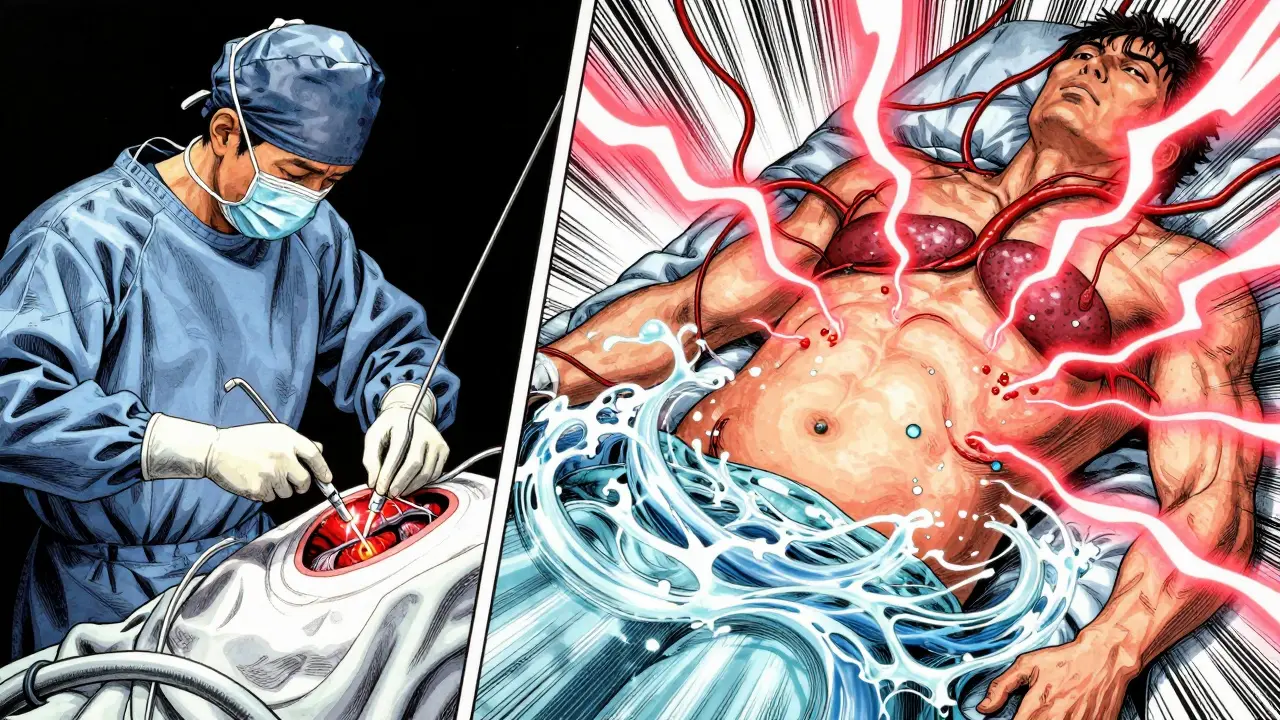
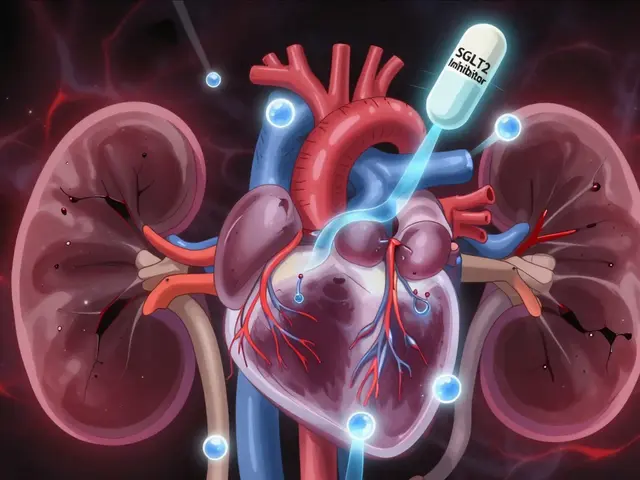
Here’s how it works: when the liver is scarred and stiff from cirrhosis, blood backs up in the portal vein. This causes pressure to build in the abdomen, known as portal hypertension. In response, the blood vessels in the gut and spleen widen - a process called splanchnic vasodilation. That sounds good, right? More blood flow? But it backfires. The body thinks it’s losing blood. So it activates every vasoconstrictor system it has: the renin-angiotensin-aldosterone system (RAAS), the sympathetic nervous system, and antidiuretic hormone (ADH). These systems clamp down on blood vessels everywhere - especially in the kidneys. The result? Blood flow to the kidneys drops by 40-50%. Glomerular filtration rate (GFR), which measures how well your kidneys filter waste, plummets by 60-70%. The kidneys shut down not from damage, but from starvation.
Two Types, Two Timelines
HRS isn’t one condition - it’s two. And they’re worlds apart in how fast they strike and how they’re treated.
Type 1 HRS is the emergency. It’s rapid, brutal, and life-threatening. Within days, serum creatinine - a key marker of kidney function - jumps to over 2.5 mg/dL (221 μmol/L). That’s a doubling or more in just two weeks. Median survival without treatment? Just two weeks. This type often shows up after a trigger like an infection (especially spontaneous bacterial peritonitis), heavy bleeding, or severe alcohol flare-ups. It’s the kind of situation that lands patients in intensive care.
Type 2 HRS moves slower. Creatinine stays between 1.5 and 2.5 mg/dL. It’s not as immediately deadly, but it’s just as serious. This type is almost always tied to refractory ascites - fluid in the belly that won’t go away no matter how much diuretic you give. Patients might be stuck in a cycle: more fluid, more swelling, more discomfort, no relief. Type 2 doesn’t kill as fast, but it’s a steady march toward transplant or death.
How Do Doctors Diagnose It?
There’s no scan or biopsy that confirms HRS. In fact, the diagnosis is made by eliminating everything else. That’s why misdiagnosis is so common - nearly one in three cases gets mislabeled.
To diagnose HRS, doctors must rule out:
- Dehydration or low blood volume (prerenal azotemia)
- Direct kidney damage (acute tubular necrosis)
- Blockages in the urinary tract (obstructive uropathy)
- Other kidney diseases like glomerulonephritis
Specific lab findings help:
- Urine sodium under 10 mmol/L
- Urine osmolality higher than blood osmolality
- No significant protein in urine (less than 500 mg/day)
- No blood in urine (fewer than 50 red blood cells per field)
And here’s the gold standard: after stopping diuretics and giving 1 gram of albumin per kilogram of body weight (up to 100g), if kidney function doesn’t improve within 48 hours - and no other cause is found - you have HRS. It’s a diagnosis of exclusion, and it demands precision.
What Triggers It?
Most cases don’t come out of nowhere. A trigger is almost always present. According to a 2020 European registry, 68% of HRS cases had a clear precipitating event:
- Spontaneous bacterial peritonitis (SBP) - 35% of cases. This is an infection in the belly fluid, often without fever or pain. It’s sneaky and deadly.
- Upper GI bleeding - 22%. Even a small bleed can trigger massive circulatory shifts.
- Acute alcoholic hepatitis - 11%. A sudden flare from heavy drinking can crash liver function fast.
- Large-volume paracentesis - removing too much belly fluid without enough albumin replacement.
If you have cirrhosis and you develop fever, confusion, vomiting blood, or sudden swelling - don’t wait. Get checked. These aren’t just symptoms. They’re red flags for HRS.
Treatment: What Works and What Doesn’t
There’s no magic pill. But there are proven strategies - and they’re time-sensitive.
For Type 1 HRS: The only proven treatment is terlipressin (or a combination of midodrine and octreotide if terlipressin isn’t available) plus intravenous albumin. Terlipressin tightens blood vessels, reversing the kidney’s blood starvation. Albumin helps restore blood volume. Together, they work. In the CONFIRM trial, 44% of patients saw their creatinine drop below 1.5 mg/dL within two weeks. But it’s not easy. Side effects include severe abdominal pain, heart rhythm problems, and reduced blood flow to the intestines or fingers. Dosing must be carefully monitored.
Patients often report: “I got terlipressin, and my creatinine dropped from 3.8 to 1.9 in 10 days - but I felt like I was being squeezed from the inside.” That’s not unusual. The treatment is intense, but it’s the best shot.
For Type 2 HRS: The focus is on managing ascites. One promising option is a transjugular intrahepatic portosystemic shunt (TIPS). This procedure creates a tunnel between the portal vein and a liver vein, reducing pressure. Studies show 60-70% of Type 2 patients see kidney function improve after TIPS. But there’s a catch: 30% develop hepatic encephalopathy - brain fog or confusion from liver toxins. So it’s a trade-off.
For both types, stopping nephrotoxic drugs - like NSAIDs (ibuprofen, naproxen), certain antibiotics, or contrast dyes - is non-negotiable. And if you’re not already on albumin infusions, you should be.
Transplant: The Only Real Cure
Let’s be blunt: without a liver transplant, HRS is almost always fatal. The numbers don’t lie.
- With vasoconstrictors and albumin, 1-year survival for Type 1 is 38.7%.
- With just supportive care? Only 18.2%.
- With a liver transplant? 71.3% survive a year.
That’s why experts now say: if you have Type 1 HRS, get on the transplant list immediately - even if your kidney numbers improve. A 2022 study showed that patients who got transplanted had a 68.4% 1-year survival rate, compared to just 22.1% with medical treatment alone. Time matters. The longer you wait, the worse your chances.
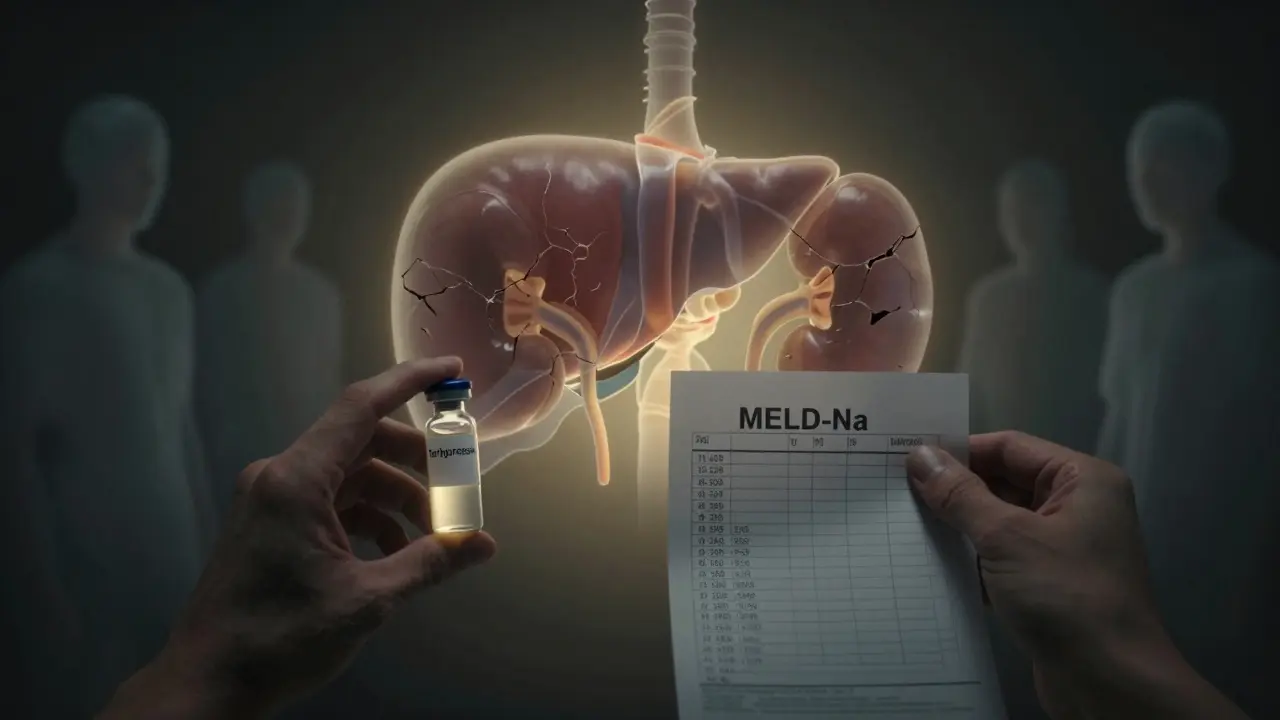
There’s also a new twist: the MELD-Na score - used to prioritize transplant candidates - now includes sodium levels. If you have HRS, your MELD-Na score gets bumped up. That means you move higher on the list. It’s not perfect, but it’s a step toward fairness.
The Real-World Struggle
Here’s the ugly truth: most people don’t get the right care.
A 2022 survey of 312 HRS patients and caregivers found:
- 78% had diagnostic delays - an average of 7.2 days before being correctly identified.
- 63% were misdiagnosed at least once.
- 41% had insurance deny coverage for terlipressin, even when they met clinical guidelines.
And cost? Terlipressin (brand name Terlivaz™) costs about $1,100 per vial. A full 14-day course can hit $13,200. In the U.S., only 35% of hospitals have a formal HRS protocol. Academic centers? 92% have hepatology consult teams. Community hospitals? Often flying blind.
One patient on Reddit shared: “My husband’s Type 2 HRS didn’t respond to meds for six weeks. We’re now on the transplant list with a MELD-Na of 28.” That’s not an outlier. It’s the norm.
What’s Next?
The future isn’t just about transplants. Researchers are chasing better tools:
- NGAL (neutrophil gelatinase-associated lipocalin) - a urine biomarker that might detect HRS before creatinine rises. The PROGRESS-HRS trial is testing if a cutoff of 0.8 ng/mL can predict HRS before it starts.
- Alfapump® - a wearable device that drains belly fluid automatically. Early trials show promise for Type 2 HRS.
- New vasoconstrictors - drugs like PB1046 are in Phase 3 trials, aiming to be safer than terlipressin.
By 2027, experts believe these innovations could cut HRS-related deaths by 30-40%. But right now, access is unequal. In sub-Saharan Africa, 89% of patients get only supportive care. In North America, 63% get vasoconstrictors. That gap isn’t just medical - it’s moral.
What Should You Do?
If you have cirrhosis:
- Know the warning signs: sudden swelling, reduced urination, confusion, unexplained fever.
- Never skip follow-ups. Even if you feel okay, your liver might be silently failing.
- Ask your doctor: “Could this be HRS?” Don’t assume it’s just dehydration or a UTI.
- Get a transplant evaluation if you haven’t already. Don’t wait until you’re in crisis.
- Keep a list of all your medications. NSAIDs, diuretics, antibiotics - they can all tip you into HRS.
If you’re a caregiver:
- Track urine output. A drop below 500 mL/day is a red flag.
- Know the hospital’s protocol. Ask: “Do you have a HRS checklist?”
- Advocate. If terlipressin is recommended and denied, ask for a second opinion or appeal.
Can hepatorenal syndrome be reversed without a transplant?
In some cases, yes - but only temporarily. Type 1 HRS can improve with terlipressin and albumin, with up to 44% of patients seeing kidney function return to near-normal levels. Type 2 HRS may respond to TIPS or better ascites management. But these are not cures. The underlying liver damage remains. Without a transplant, the condition almost always returns, and survival beyond one year is rare without a liver transplant.
Is hepatorenal syndrome the same as acute kidney injury (AKI)?
No. AKI is a broad term for any sudden kidney decline. HRS is a specific type of AKI that happens only in people with advanced liver disease, and it’s caused by circulatory problems - not direct kidney damage. Doctors must rule out other causes of AKI (like dehydration or infection) before diagnosing HRS. It’s a subset, not the same thing.
Why is terlipressin not FDA-approved in the U.S. for HRS?
Actually, it is. Terlipressin (brand name Terlivaz™) received FDA approval for HRS-1 on December 22, 2022. Before that, it was used off-label. Now it’s approved, but it’s expensive - around $1,100 per vial - and many insurers still resist covering it. Access remains a major barrier, even with approval.
Can drinking alcohol worsen hepatorenal syndrome?
Absolutely. Alcohol is a direct toxin to the liver and can trigger acute alcoholic hepatitis, which is one of the top causes of HRS. Even small amounts can destabilize someone with cirrhosis. Abstinence isn’t just recommended - it’s essential for survival. Continuing to drink after an HRS diagnosis almost guarantees rapid decline.
How do I know if I’m at risk for hepatorenal syndrome?
If you have cirrhosis - especially with ascites, high MELD-Na score, or recent infection or bleeding - you’re at risk. Other red flags: low sodium levels, high creatinine, or sudden reduction in urine output. Regular monitoring of kidney function and sodium levels is critical. Ask your hepatologist for a HRS risk assessment every 3-6 months if you have advanced liver disease.
Final Thoughts
Hepatorenal syndrome doesn’t care about your age, your income, or your insurance. It only cares about how far your liver has fallen. It’s a silent killer that moves faster than most people realize. But it’s not inevitable. With early recognition, proper treatment, and timely transplant listing, survival is possible. The tools exist. The knowledge is there. What’s missing is urgency - in clinics, in homes, and in the system. If you’re living with cirrhosis, don’t wait for symptoms to scream. Ask the question now: Could this be HRS? Because if it is, time isn’t on your side.


Sabrina Sanches
March 13, 2026I had a friend go through this last year. They were misdiagnosed for weeks until someone finally asked about HRS. Terlipressin saved her life. Now she’s on the transplant list. Don’t wait for symptoms to scream. Ask the question. Now. Seriously.
Shruti Chaturvedi
March 14, 2026In India we rarely see terlipressin. Most just get diuretics and hope. We need affordable access. My uncle had Type 2 HRS. TIPS helped but he got encephalopathy. No one told us the tradeoff. Education matters more than drugs sometimes.
Katherine Rodriguez
March 15, 2026This whole post is just fearmongering. You’re making people panic over a diagnosis that’s overused. Most cases are just dehydration. Stop pushing expensive drugs and get people to drink water. Also why is everyone obsessed with transplants? We have dialysis. It’s not 1990 anymore.
Devin Ersoy
March 16, 2026Let’s be real - HRS isn’t a medical mystery, it’s a capitalist trap. Terlipressin costs $13k? That’s not a drug, that’s a ransom note. And don’t get me started on how hospitals use MELD-Na like a lottery ticket. The system doesn’t want you cured. It wants you enrolled. I’ve seen this play out in three different ICUs. The real cure? Defund the middlemen.
Sally Lloyd
March 17, 2026I’ve been following this. I think the real trigger isn’t SBP or bleeding. I think it’s the glyphosate in our water. The same stuff that’s wrecking the liver is poisoning the kidneys. The WHO won’t say it but the data’s there. And don’t you dare tell me it’s coincidence that HRS spikes in counties with Monsanto factories.
Emma Deasy
March 17, 2026I am absolutely devastated by the systemic neglect outlined in this post. The fact that 78% of patients endure diagnostic delays? That’s not negligence - it’s a moral catastrophe. Each day of delay is a life slipping through the cracks of a broken healthcare cathedral. We must demand institutional accountability. We must write to our senators. We must flood the halls of Congress with petitions. We must - we must - we must - act. Now. Before another soul vanishes into the void of misdiagnosis.
tamilan Nadar
March 19, 2026In my village in Tamil Nadu, we use neem and turmeric for liver support. Not a single person here knows what terlipressin is. But we’ve seen people live 5 years with ascites and no dialysis. Maybe Western medicine misses the point. Body heals when you treat the whole person. Not just the numbers.
Adam M
March 19, 2026If you’re asking if HRS can be reversed without transplant, the answer is no. Stop fooling yourself. The liver’s gone. The kidneys are just following. Get on the list or start making peace.