
CoQ10 for Statin Muscle Pain Calculator
Personalized CoQ10 Calculator
Your Personalized Results
Based on your settings, this is what you should expect:
Important Notes:
- Take with a fat-containing meal for best absorption
- Results typically take 4-12 weeks to appear
- Stop taking if you experience severe side effects
- CoQ10 is safe to take with statins and most other medications
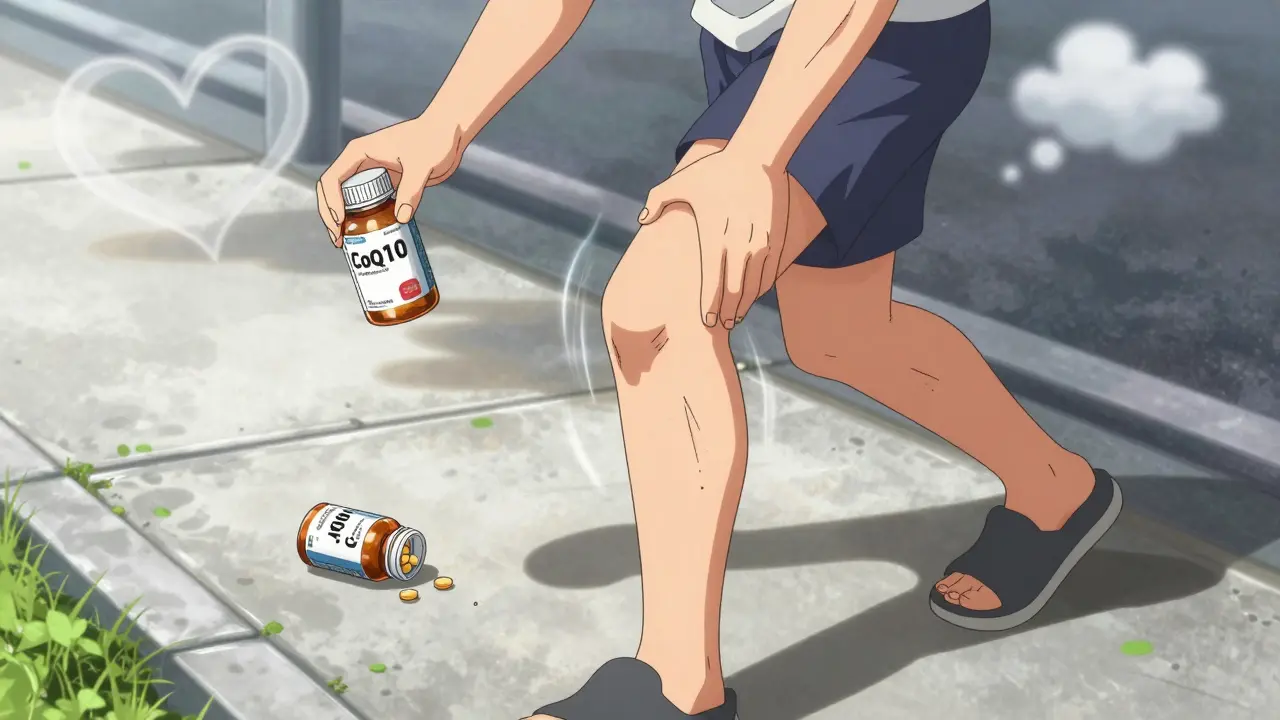
Millions of people take statins every year to lower cholesterol and reduce the risk of heart attacks and strokes. But for a significant number of them, the side effects are hard to ignore-especially muscle pain. It’s not just a minor ache. For some, it’s cramps, weakness, or fatigue that makes walking, climbing stairs, or even getting out of bed feel like a chore. And when that happens, many stop taking their statin altogether. That’s risky. Statins save lives. So what if there was a simple, safe supplement that could help? Enter Coenzyme Q10-often called CoQ10. Does it actually help with statin-related muscle pain? Let’s cut through the noise.
Why Statins Cause Muscle Pain
Statins work by blocking an enzyme called HMG-CoA reductase. That’s how they lower LDL (bad) cholesterol. But here’s the catch: that same enzyme is also involved in making CoQ10. CoQ10 isn’t just some random vitamin. It’s a compound your body naturally produces, and it’s essential for energy production in your muscles. Think of it like the spark plug in your car’s engine. Without enough of it, your muscle cells struggle to generate the energy they need to function properly. Studies show statins can reduce CoQ10 levels in the blood by 16% to 54%. That’s a big drop. And since muscles use a lot of energy, they’re especially sensitive to this shortage. That’s why muscle pain is one of the most common reasons people quit statins. According to the Mayo Clinic, between 5% and 20% of statin users experience muscle symptoms. That’s millions of people. And about half of them stop taking their statin within two years, mostly because of muscle discomfort.What Does the Science Say?
The idea that CoQ10 supplements might fix this problem sounds logical. And it’s been tested-over and over. A major 2018 meta-analysis in the Journal of the American Heart Association looked at 12 clinical trials involving 575 people. The results? People taking CoQ10 reported significantly less muscle pain, less weakness, and less fatigue compared to those on placebo. The average reduction in muscle pain scores was 1.6 points on a 10-point scale. That’s not just a tiny improvement. That’s meaningful. But here’s where it gets messy. Not every study agrees. A 2007 trial by Young and colleagues gave people 200 mg of CoQ10 daily for 12 weeks. Plasma CoQ10 levels went up, but muscle pain didn’t get better. Another study even found that muscle tissue CoQ10 levels increased in some statin users, which contradicts the whole theory. So why the conflicting results? A few reasons. First, the studies used different doses-some as low as 50 mg, others up to 600 mg. Second, they used different forms of CoQ10: ubiquinone (the oxidized form) vs. ubiquinol (the reduced, more absorbable form). Third, the way muscle pain was measured wasn’t consistent. One trial might ask patients to rate pain on a scale. Another might just track how many people dropped out of the study. And most trials were small-under 100 people. That’s not enough to draw firm conclusions.What Do Experts Actually Recommend?
The National Lipid Association and the American College of Cardiology both say the evidence isn’t strong enough to recommend CoQ10 as a standard treatment. But they also don’t say to avoid it. The ACC’s 2022 guidelines say: if a patient is struggling with muscle pain and wants to try CoQ10, a 3- to 6-month trial is reasonable. That’s not a blanket endorsement. It’s a pragmatic middle ground. Cardiologists, in practice, are more open-minded. A 2021 survey of 500 U.S. cardiologists found that 42% would recommend CoQ10 to a patient with statin-related muscle pain. Why? Because they’ve seen it work. And they know the risks of stopping statins are far greater than the risks of taking CoQ10. The European Atherosclerosis Society puts it this way: the biological mechanism makes sense. The clinical data is mixed. We need better studies. That’s fair. But until then, many doctors are willing to let patients try it.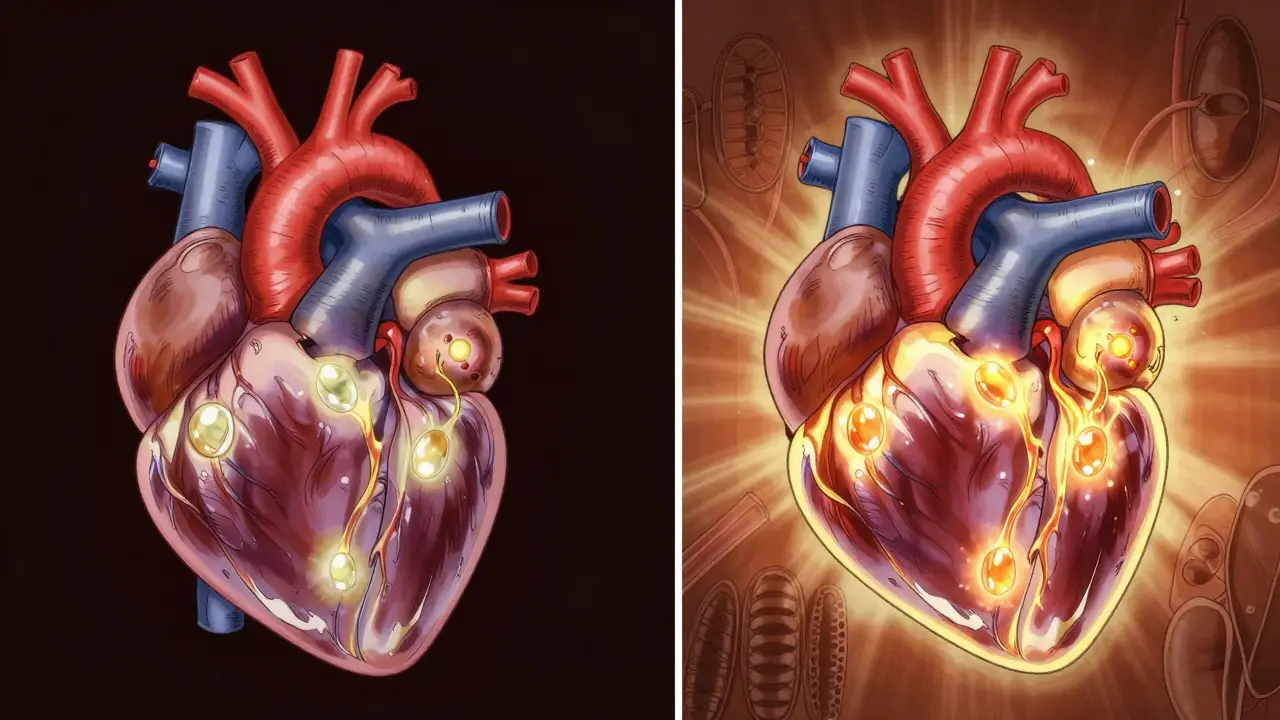
What Should You Take-and How?
If you’re considering CoQ10, here’s what the data suggests:- Dose: Start with 100-200 mg per day. Some studies used up to 600 mg, but higher doses haven’t proven better. Stick to the lower end unless your doctor says otherwise.
- Form: Choose ubiquinol. It’s the active form your body uses. It’s absorbed better than ubiquinone-especially if you’re over 40, since your body makes less of it naturally.
- Timing: Take it with a meal that contains fat. CoQ10 is fat-soluble. Without fat, you’re just wasting your money.
- Patience: Don’t expect results in a week. It takes 4 to 12 weeks for CoQ10 to build up in your muscle tissue. If you don’t notice a difference after 3 months, it probably won’t help you.
Is It Safe? What About Cost?
One of the biggest advantages of CoQ10 is safety. In over 40 years of use, no serious side effects have been reported-even at doses up to 600 mg/day. Some people report mild stomach upset, but that’s rare. No drug interactions have been proven. It’s safe to take with statins, blood thinners, or other medications. Cost-wise, it’s cheap. A 30-day supply of 100-200 mg ubiquinol typically costs $15-$40. Compare that to switching to a more expensive statin or paying for muscle physical therapy. Even without insurance, CoQ10 is affordable.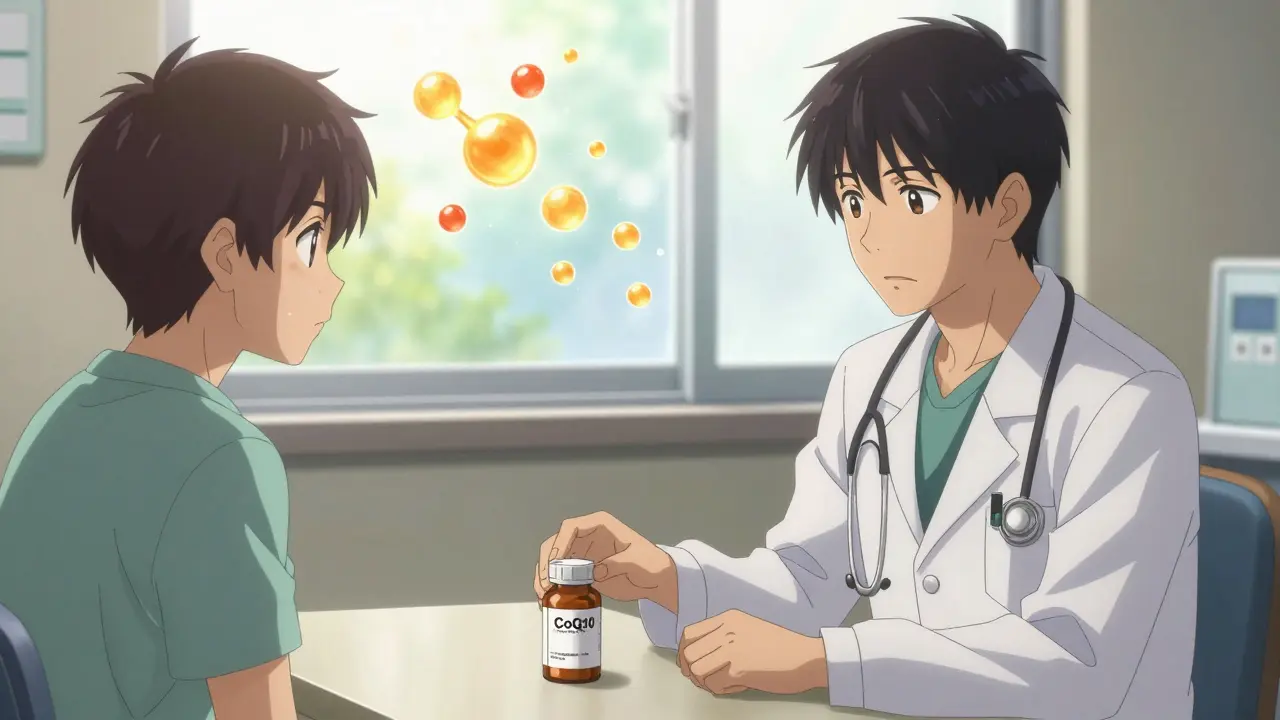
Real People, Real Results
Online forums are full of stories. On Reddit’s r/Supplements, 78% of 142 users said CoQ10 helped their statin muscle pain. One person wrote: “After six months of leg cramps on atorvastatin, CoQ10 200 mg daily eliminated my symptoms in three weeks.” But not everyone wins. On Drugs.com, another user said: “Tried three brands of CoQ10 for four months. Zero improvement.” That’s the reality. About half the people who try it see some benefit. A third see significant relief. The rest? Nothing. It’s not a miracle. But for some, it’s the difference between staying on a life-saving medication and quitting it.When CoQ10 Won’t Help
CoQ10 isn’t a cure-all. If you’re experiencing severe muscle pain, weakness, or dark urine (a sign of rhabdomyolysis), stop your statin and see your doctor immediately. That’s a medical emergency. CoQ10 won’t fix that. Also, if your muscle pain started right after you switched statins, it might be the specific drug-not the CoQ10 depletion. Sometimes, switching from atorvastatin to rosuvastatin or pravastatin helps. Or going to a lower dose. CoQ10 is just one tool. It doesn’t replace the need to work with your doctor to find the right statin, dose, or alternative.Final Thoughts
There’s no definitive proof that CoQ10 stops statin muscle pain. But there’s enough evidence to suggest it might help-and no real downside. If you’re struggling with muscle pain and your doctor agrees, it’s worth a try. Start with 100-200 mg of ubiquinol daily, take it with food, and give it at least 8 weeks. If you feel better? Great. If not? You didn’t lose much. But if you stop your statin because of pain? You could be putting your heart at risk. This isn’t about supplements replacing medicine. It’s about finding a way to keep taking the medicine that keeps you alive.Can CoQ10 interfere with how statins work?
No. CoQ10 doesn’t affect how statins lower cholesterol. Studies show cholesterol levels remain unchanged when CoQ10 is added. Its only role is to support muscle energy production, not interfere with the statin’s mechanism. You can safely take both together.
Is ubiquinol better than ubiquinone for statin users?
Yes, especially if you’re over 40 or have trouble absorbing supplements. Ubiquinol is the reduced, active form of CoQ10 your body uses directly. It’s absorbed 3 to 8 times better than ubiquinone. Most clinical trials showing benefit used ubiquinol or didn’t specify the form-so choosing ubiquinol gives you the best shot at results.
How long does it take for CoQ10 to work for muscle pain?
It usually takes 4 to 12 weeks. Muscle tissue needs time to rebuild CoQ10 levels. Studies showing success used trials of 30 days to 12 weeks. If you don’t notice improvement after 3 months, it’s unlikely to help you. Don’t keep taking it indefinitely without results.
Can I take CoQ10 if I’m not on a statin?
You can, but there’s no clear benefit for muscle pain if you’re not taking a statin. CoQ10 levels naturally decline with age, so some people take it for general energy or heart health. But for non-statin users, there’s no evidence it reduces muscle pain or improves performance.
Should I stop my statin if I start taking CoQ10?
Never stop a statin without talking to your doctor. CoQ10 is not a replacement. It’s a supportive supplement. Stopping your statin increases your risk of heart attack and stroke. If you’re having side effects, work with your doctor to adjust your dose, switch statins, or try CoQ10-not quit the medication.

Sanjana Rajan
March 16, 2026Ugh, another supplement hustle. CoQ10? Really? People are so desperate to blame everything on 'nutrient depletion' that they'll swallow pills like candy. Statins cause muscle pain because they're powerful drugs - not because your body is 'low on spark plugs.' If it were that simple, we'd all be taking multivitamins instead of statins. Stop chasing magic bullets and talk to your doctor about dose adjustments or switching statins. CoQ10 isn't a fix - it's a distraction.
Also, 'ubiquinol is better'? Bro, that's just marketing speak. Your body converts ubiquinone just fine. Unless you're 70 and can't digest food, you're wasting money.
And no - I don't care if Reddit says it 'worked for them.' Anecdotes aren't data. I've seen 3 people stop statins for this and end up in the ER. Don't be one of them.
Kyle Young
March 16, 2026It's fascinating how the biological plausibility of CoQ10 supplementation aligns so neatly with the pharmacological mechanism of statins - the inhibition of HMG-CoA reductase directly impacts the mevalonate pathway, which is upstream of both cholesterol and CoQ10 biosynthesis. Yet, clinical translation remains inconsistent. Why? Because human physiology is not a linear biochemical pathway; it's a networked, adaptive system with compensatory mechanisms, genetic variability, and environmental modulators.
Perhaps the disconnect lies not in the supplement's efficacy, but in our reductionist approach to symptom attribution. Muscle pain may be a proxy for systemic inflammation, mitochondrial stress, or even psychosomatic response to perceived side effects. The fact that some studies show increased tissue CoQ10 without symptom relief suggests we're measuring the wrong biomarkers.
We need longitudinal, multi-omics studies - not just pain scales and plasma levels. Until then, the 'reasonable trial' recommendation remains the most scientifically honest position we have.
Melissa Stansbury
March 18, 2026I took CoQ10 for 4 months. Zero change. Then I switched from atorvastatin to pravastatin and boom - no more cramps. Coincidence? I think not. CoQ10 is a band-aid. The real fix is finding the right statin. Most docs don't even know this. They just hand you a supplement and say 'try this.'
Also - why does everyone assume ubiquinol is better? I bought the expensive stuff. Same results as the $8 version. Marketing. Pure marketing. Stop being fooled.
cara s
March 18, 2026Okay. So. Let’s just take a breath here. The entire CoQ10 debate hinges on a very specific biochemical pathway - the mevalonate pathway - which, yes, statins inhibit. And yes, CoQ10 is synthesized downstream from that. So theoretically, it makes sense. But theory doesn’t always translate to clinical outcomes. Not because people are stupid. Not because supplements are scams. But because biology is messy.
And here’s the thing: the studies that showed benefit? Most of them used ubiquinol. The ones that didn’t? They used ubiquinone. So maybe it’s not about whether CoQ10 works - it’s about whether we’re giving the right form. Also, timing. Dose. Duration. Fat intake. Gut microbiome. Sleep. Stress. All of it matters.
So yes - try it. But don’t expect a miracle. And don’t blame the supplement if it doesn’t work. Blame the complexity of human physiology. And maybe, just maybe, ask your doctor about rosuvastatin. It’s gentler on muscles.
Also - take it with avocado toast. Not just any fat. Avocado fat. It’s better. Science says so. Probably.
Also also - I’m 52. I take 200mg ubiquinol. I feel… fine. Not energized. Not cured. Just… fine. Is that enough? Maybe. Maybe it is.
Amadi Kenneth
March 20, 2026COQ10 IS A BIG PHARMA TRICK. THEY WANT YOU TO THINK YOU NEED TO BUY SUPPLEMENTS BECAUSE THEY MADE STATINS THAT DEPLETE NATURAL COQ10 - SO THEY CAN SELL YOU THE FIX. IT’S A SCHEME. THE FDA KNOWS THIS. THEY’RE SILENT BECAUSE THEY’RE IN BED WITH BIG PHARMA. YOU THINK THEY’RE NOT PROFITING FROM THIS? THEY’RE MAKING BILLIONS OFF THE FACT THAT YOU’RE TOO SCARED TO STOP STATINS - AND TOO DUMB TO REALIZE YOU’RE BEING MANIPULATED.
AND DON’T EVEN GET ME STARTED ON 'UBIQUINOL' - THAT’S JUST A BRAND NAME FOR THE SAME CHEMICAL. THEY REPACKAGED IT, CHARGED 5X MORE, AND NOW PEOPLE ARE BUYING IT LIKE IT’S GOLD.
THE REAL SOLUTION? STOP STATINS. EAT REAL FOOD. MOVE YOUR BODY. THE HEART DOESN’T NEED CHEMICALS - IT NEEDS LIVING.
AND IF YOU GET A HEART ATTACK? WELL. YOU WERE WARNED.
Laura Gabel
March 21, 2026CoQ10? Please. This is why America’s healthcare is a joke. We’re so obsessed with quick fixes that we turn every side effect into a supplement opportunity. Statins work. Muscle pain? Tough. You think your body’s gonna thank you for taking a pill to prevent a heart attack? Maybe you should’ve stayed healthy in the first place.
Also - 'ubiquinol'? Sounds like a Netflix show. Just take the statin. Quit complaining. Your heart doesn’t care if your legs ache.
jerome Reverdy
March 22, 2026Let’s cut through the noise: statins are one of the most effective cardiovascular interventions we have. CoQ10 isn’t a replacement - it’s a potential mitigator. The data’s messy, sure. But the risk-benefit ratio? Almost impossible to argue against. You’re talking about a substance with zero serious side effects, costing less than a coffee a day, and potentially preventing someone from quitting a life-saving drug.
That’s not pseudoscience. That’s harm reduction.
And yes - ubiquinol > ubiquinone. Bioavailability matters. Fat matters. Time matters. And yes - 3 months is the minimum. Don’t give up after 2 weeks.
Also - if you’re 60+ and on a statin? You’re not 'low on CoQ10' because you're old. You’re low because statins shut off the factory. Your body doesn’t make enough. That’s not a myth. That’s biochemistry.
Andrew Mamone
March 24, 2026CoQ10 isn’t magic. But it’s not nonsense either. 🧪
100mg ubiquinol with dinner. 3 months. No expectations.
If it helps? Win.
If not? You’re still on your statin. Win.
It’s the only supplement I’ve ever seen where the downside is literally zero.
Why wouldn’t you try it? 🤷♂️
MALYN RICABLANCA
March 25, 2026OH MY GOD. I’M SO GLAD YOU WROTE THIS. I WAS JUST TALKING TO MY CARDIOLOGIST ABOUT THIS LAST WEEK AND SHE SAID 'TRY COQ10' AND I THOUGHT SHE WAS JUST BEING POLITE - BUT THEN I READ THIS AND REALIZED SHE ACTUALLY BELIEVES IN IT??
SO I TOOK 200MG OF UBIQUINOL WITH MY AVOCADO TOAST (YES, I’M A FAN OF FAT-DEPENDENT ABSORPTION - THANK YOU FOR THAT TIP) AND - AND - I CAN WALK UP STAIRS WITHOUT FEELING LIKE I’M RUNNING A MARATHON.
IT TOOK 6 WEEKS. I ALMOST GAVE UP. BUT THEN - ONE MORNING - I WOKE UP AND MY LEGS DIDN’T FEEL LIKE THEY WERE MADE OF SAND.
I CRIED. I DIDN’T KNOW YOU COULD CRY OVER MUSCLE PAIN. BUT I DID.
TO THE PERSON WHO SAID 'IT’S JUST MARKETING' - YOU HAVEN’T LIVED THIS. I WAS GOING TO QUIT MY STATIN. I WAS SO SCARED OF MY OWN BODY. AND NOW? I’M STILL HERE. STILL TAKING MY STATIN. AND I’M NOT AFRAID.
THANK YOU. FROM THE BOTTOM OF MY HEART.
PS - I’M 68. I’VE HAD STROKE RISK SINCE I WAS 50. I’M STILL HERE. BECAUSE OF COQ10. AND AVOCADO TOAST.
gemeika hernandez
March 26, 2026CoQ10 doesn't work. I tried it. My legs still hurt. My doctor said 'it's placebo' and I believed her. Just take your statin. Stop looking for easy answers. Your body's not broken. You're just lazy.
Nicole Blain
March 27, 2026took ubiquinol for 2 months. no change. switched statins. problem gone. 🤷♀️
coq10 = expensive placebo for some. not for all. but not magic.
Kathy Underhill
March 27, 2026The biological plausibility is sound. The clinical evidence is inconclusive. The risk of supplementation is negligible. The risk of discontinuing statin therapy is substantial. Therefore, a trial of CoQ10 is a rational, evidence-informed, low-risk intervention. Not a cure. Not a panacea. But a reasonable adjunct. The burden of proof lies not with the supplement, but with the assumption that muscle pain is inevitable - when, in fact, it may be modifiable. We owe our patients more than fatalism.
Also - ubiquinol. With fat. 100mg. 90 days. If no improvement - discontinue. No guilt. No shame. Just science.
Srividhya Srinivasan
March 27, 2026COQ10 IS A LIE. STATINS ARE DESIGNED TO DEPLETE YOUR NATURAL COQ10 SO YOU’LL BUY THE SUPPLEMENT - AND THEN YOU’LL BE STUCK ON THEM FOREVER. THE PHARMA COMPANIES OWN THE STUDIES. THE FDA IS CORRUPT. THEY WANT YOU WEAK. THEY WANT YOU DEPENDENT. THEY WANT YOU TO PAY FOR EVERYTHING - EVEN THE VITAMINS YOUR BODY USED TO MAKE ON ITS OWN.
AND DON’T EVEN GET ME STARTED ON 'UBIQUINOL' - THAT’S JUST A BRAND NAME FOR THE SAME CHEMICAL. THEY PAID A MARKETER TO RENAME IT AND CHARGE 10X MORE.
THE REAL ANSWER? STOP STATINS. EAT ORGANIC. DO YOGA. PRAY. YOUR BODY KNOWS HOW TO HEAL ITSELF - IF YOU LET IT.
Prathamesh Ghodke
March 29, 2026Hey - I’m a pharmacist in Mumbai. We see this all the time. CoQ10? It helps some. Not all. But here’s the thing - in India, statin adherence is already low. Muscle pain? It’s the #1 reason people quit. So we tell them: try CoQ10. For 3 months. With food. It costs less than a chai.
And you know what? Some of them come back and say, 'I didn’t think it worked… until I realized I could climb stairs without holding the railing.'
We don’t call it a cure. We call it a bridge. And sometimes? A bridge is all you need to get to the other side.