To get the most out of your visit, you first need to understand what you're actually looking for. Not all interactions are the same. The Food and Drug Administration (FDA) breaks them down into three main buckets: drug-drug, drug-food/beverage, and drug-condition. A drug-drug interaction is when two medications fight or amplify each other. A drug-food interaction happens when something like a high-tyramine food (like aged cheese) triggers a blood pressure spike for someone on certain antidepressants. Then there are drug-condition interactions, where a medicine for one problem actually makes another existing health issue worse.
The Essential Questions for Every New Prescription
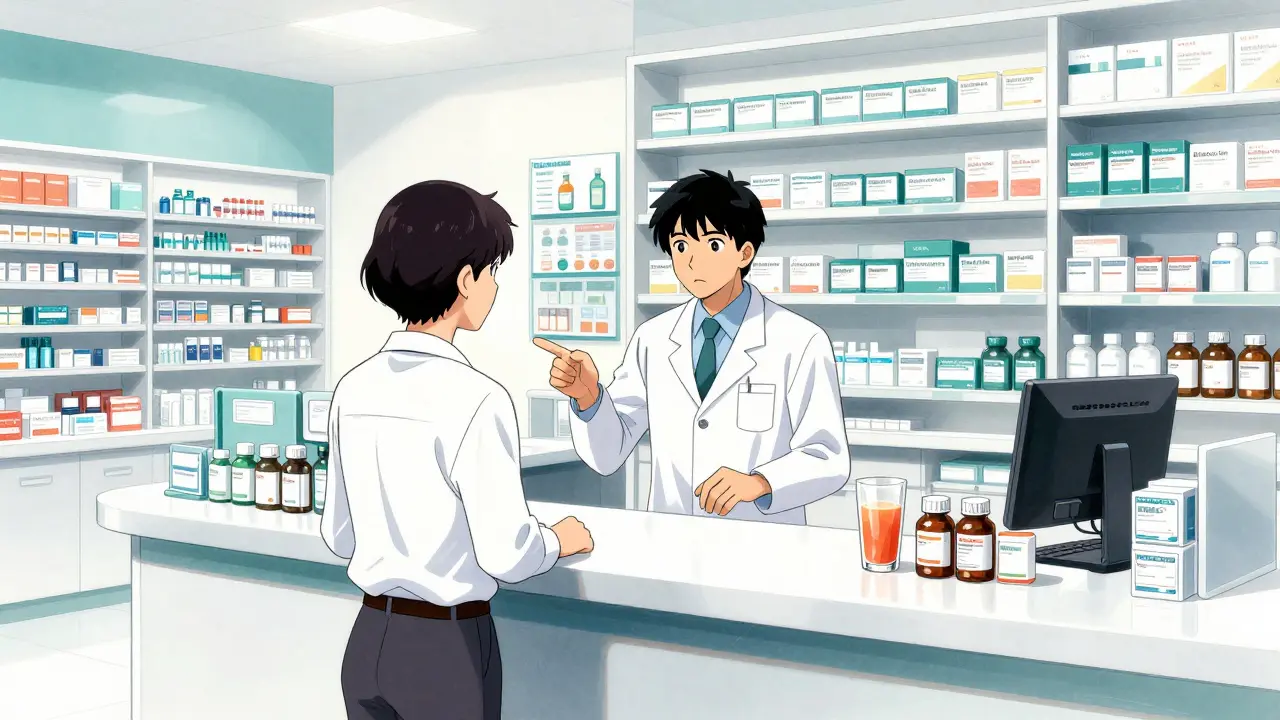
When you're standing at the counter, it's easy to just nod and leave. Instead, use these targeted questions to uncover risks that might not be obvious. The goal here is to move past "Is this safe?" and get into the specifics of how the medicine behaves in your unique system.
- "Can I take this with the other medications I'm currently using?" This is the big one. Whether it's a prescription for cholesterol or a simple over-the-counter pain reliever, every single substance counts.
- "Are there specific foods, drinks, or supplements I need to avoid?" Not everything is a "drug." For example, Grapefruit juice is a common culprit that can stop the body from breaking down certain medications, potentially leading to toxic levels in your bloodstream.
- "What are the red flags or signs of an interaction I should look for?" You need to know if a sudden rash, dizziness, or extreme drowsiness is a normal side effect or a sign that two drugs are clashing.
- "How does this drug actually work in my body, and will it interfere with my other health conditions?" For instance, some decongestants can spike blood pressure, which is a huge risk for anyone dealing with hypertension.
The Danger of the "Hidden" List: Supplements and OTCs
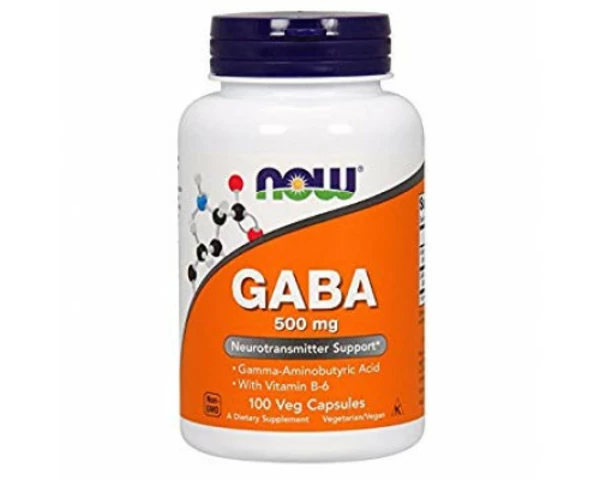
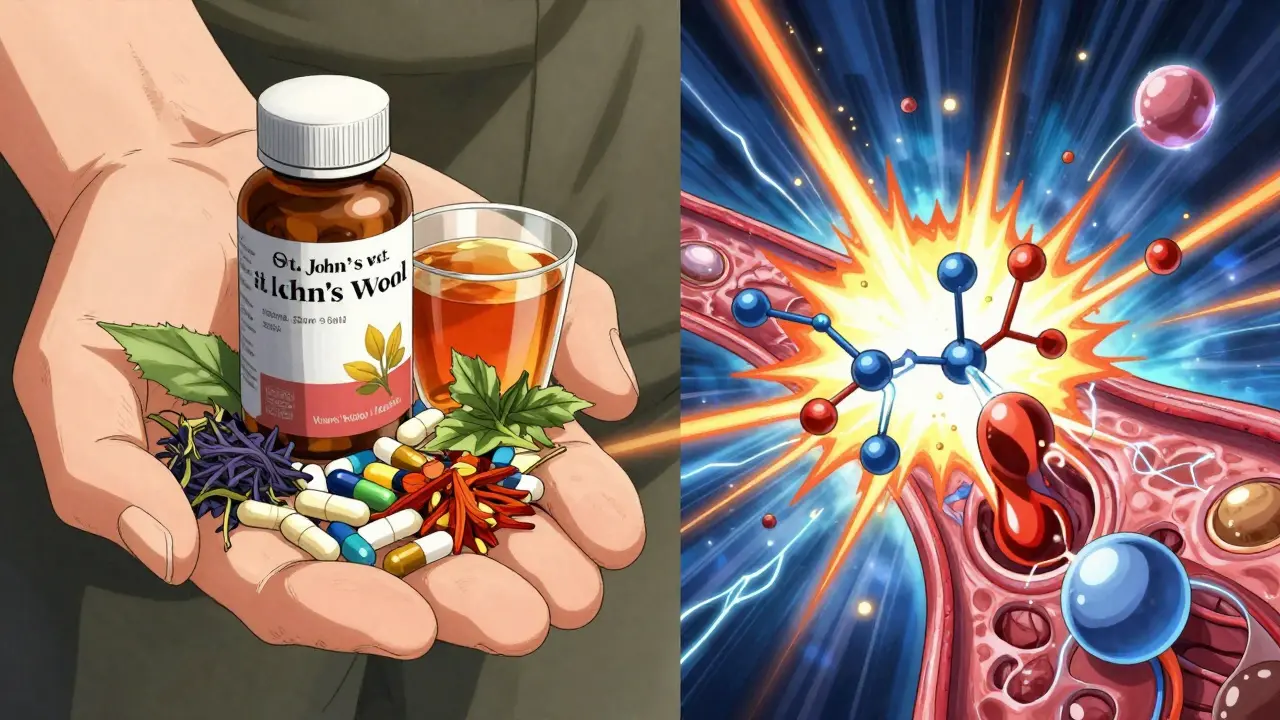
One of the biggest mistakes people make is only telling their pharmacist about things they got with a prescription. Your pharmacist needs the full picture. If you're taking a "natural" herbal tea or a daily vitamin, that's still a chemical compound entering your system. St. John's wort, often used for mood, is notorious for speeding up the liver's metabolism, which can make other life-saving drugs less effective because they're cleared from your body too quickly.
Consider the case of blood thinners like Warfarin. This medication is incredibly sensitive. If you suddenly start eating a lot of kale or spinach (which are rich in Vitamin K), you can actually counteract the medicine's ability to prevent clots. This isn't a failure of the drug; it's a classic drug-food interaction. If you don't disclose your diet and supplement habits, your pharmacist can't warn you about these critical shifts.
| Trigger Entity | Potential Effect | Example Interaction |
|---|---|---|
| Grapefruit Juice | Inhibits enzyme breakdown | Increases levels of certain statins (cholesterol meds) |
| St. John's wort | Induces enzyme activity | Reduces efficacy of birth control or anticoagulants |
| Vitamin K (Leafy Greens) | Counteracts blood thinning | Reduces the effect of Warfarin |
| Aged Cheeses | Tyramine reaction | Blood pressure spikes for those on MAO inhibitors |
Mastering the Consultation: A Practical Strategy
To make the most of your time, don't rely on memory. The American Society of Health-System Pharmacists (ASHP) suggests a systematic approach to medication reviews. You can help this process by arriving prepared. Bring a physical list of every pill, powder, and liquid you take, including the exact dose and how often you take it.
Timing is also a huge factor. Ask your pharmacist, "Should I take this with food or on an empty stomach?" Some drugs need fat to be absorbed, while others are blocked by the presence of food. If you take two different medications at the exact same time, one might block the absorption of the other. Ask if you need to space them out by two or four hours to ensure both are working correctly.
Finally, make this a habit. Don't just do it once. I recommend a full medication review at least every three months, or anytime you add a new supplement to your routine. Often, the most recently added medication is the one causing a new, unexpected side effect.
The Role of Modern Tech and Its Limits
You might notice your pharmacist glancing at a computer screen that flags potential issues. Many pharmacies now use electronic health records that trigger real-time alerts. While these are great, they aren't perfect. Some studies show that nearly 20% of clinically significant interactions are missed because the computer doesn't know what you're buying at the health food store or which vitamins you're taking at home.
This is why your voice is the most important part of the safety check. The software only knows what's in the system; the pharmacist only knows what you tell them. By asking the specific questions mentioned above, you fill the gap between the digital alert and your actual biological reality.
What is the difference between a side effect and a drug interaction?
A side effect is an unwanted reaction caused by a single drug (like feeling sleepy after taking an antihistamine). A drug interaction happens when a second substance-another drug, a food, or a supplement-changes how that first drug works, either making it more toxic or less effective.
Can herbal supplements cause dangerous interactions?
Yes. Many people assume "natural" means "safe," but herbal products contain potent chemicals. For example, St. John's wort can significantly reduce the blood levels of various prescription medications, while others can increase the risk of bleeding if taken with blood thinners.
Why does grapefruit juice interfere with medications?
Grapefruit juice blocks an enzyme in the small intestine that normally breaks down certain drugs. When this enzyme is blocked, more of the drug enters your bloodstream than intended, which can lead to an overdose even if you took the correct dose.
Should I be worried about over-the-counter (OTC) meds?
Absolutely. Common OTC drugs, like decongestants or NSAIDs (ibuprofen), can interact with prescription medications. For instance, some decongestants can raise blood pressure, potentially canceling out the effects of your hypertension medication.
How often should I review my meds with a pharmacist?
It is best to do a comprehensive review quarterly or whenever a new medication or supplement is added to your regimen. This helps catch "polypharmacy" issues where the cumulative effect of multiple drugs creates new risks.
Next Steps for Your Safety
If you're currently taking multiple medications, start by creating a master list today. Include the brand name, the dose (e.g., 20mg), and the time of day you take it. Your next pharmacy visit should be less about just picking up a bag and more about a conversation. If you feel the pharmacist is too busy to talk, politely ask for a "medication therapy management" consultation, which is a dedicated time to go over these safety checks without the rush of the checkout line.