
Opioid Withdrawal Timeline Calculator
Calculate Your Withdrawal Timeline
Symptoms begin:
- Watery eyes, runny nose
- Yawning, restlessness
- Muscle aches
Peak Symptoms:
- Severe diarrhea and vomiting
- Abdominal cramps
- Intense anxiety and cravings
Symptoms begin to fade:
- Gradual reduction of physical symptoms
- Emotional symptoms may persist
- Difficulty sleeping
When someone stops using opioids after relying on them for weeks or months, their body doesn’t just adjust quietly. It fights back. Opioid withdrawal isn’t a choice-it’s a physical reality. And while it’s not usually deadly, it’s one of the most uncomfortable experiences a person can go through. Knowing what to expect and how to handle it can make all the difference between quitting for good and slipping back into use.
When Do Withdrawal Symptoms Start?
The timing of opioid withdrawal depends entirely on the type of opioid used. Short-acting opioids like heroin, oxycodone, or hydrocodone start causing symptoms within 8 to 12 hours after the last dose. You might notice early signs like watery eyes, a runny nose, yawning, or restlessness. These aren’t just "feeling off"-they’re your nervous system reacting to the sudden absence of the drug. Long-acting opioids like methadone or extended-release oxycodone take longer to clear. Withdrawal symptoms here don’t show up until 24 to 36 hours after the last dose. This delay can be misleading. Someone might think they’re fine because they don’t feel sick right away, only to crash hard two days later.What Happens During Each Phase?
Opioid withdrawal unfolds in three clear stages, each with its own set of challenges.- Early Stage (6-24 hours): This is when flu-like symptoms hit hard. Muscle aches, sweating, anxiety, nausea, and insomnia are common. Many people describe this as feeling like the worst cold of their life, but worse-because it’s not going away in a few days.
- Peak Stage (48-72 hours): This is the hardest part. Symptoms intensify. Diarrhea, vomiting, abdominal cramps, dilated pupils, chills, and goosebumps become severe. Heart rate and blood pressure spike. Emotional symptoms like depression and intense cravings also peak. This is when most people consider going back to using just to make it stop.
- Final Stage (7-14 days): Physical symptoms begin to fade. But emotional ones hang on. Anxiety, irritability, trouble sleeping, and low mood can last for weeks. This phase is dangerous because it’s when relapse is most likely. The body may feel better, but the brain still screams for the drug.
How Bad Is It Really?
Some people think withdrawal is just "being sick." It’s more than that. It’s your body’s autonomic nervous system going into overdrive. You’re not just tired-you can’t sleep. You’re not just nauseous-you can’t keep food or water down. Your muscles cramp. Your heart races. You feel like you’re falling apart. Clinical tools like the Clinical Opioid Withdrawal Scale (COWS) measure severity. A score of 5-12 is mild. 13-24 is moderate. 25-36 is moderately severe. Above 37? That’s severe withdrawal. People with severe scores often need hospital-level care. And here’s something many don’t realize: withdrawal alone doesn’t kill. But what happens after? The real danger is relapse. When tolerance drops during withdrawal, a dose that once felt normal can now be fatal. Studies show overdose risk triples in the first four weeks after detox. That’s why medical supervision isn’t optional-it’s lifesaving.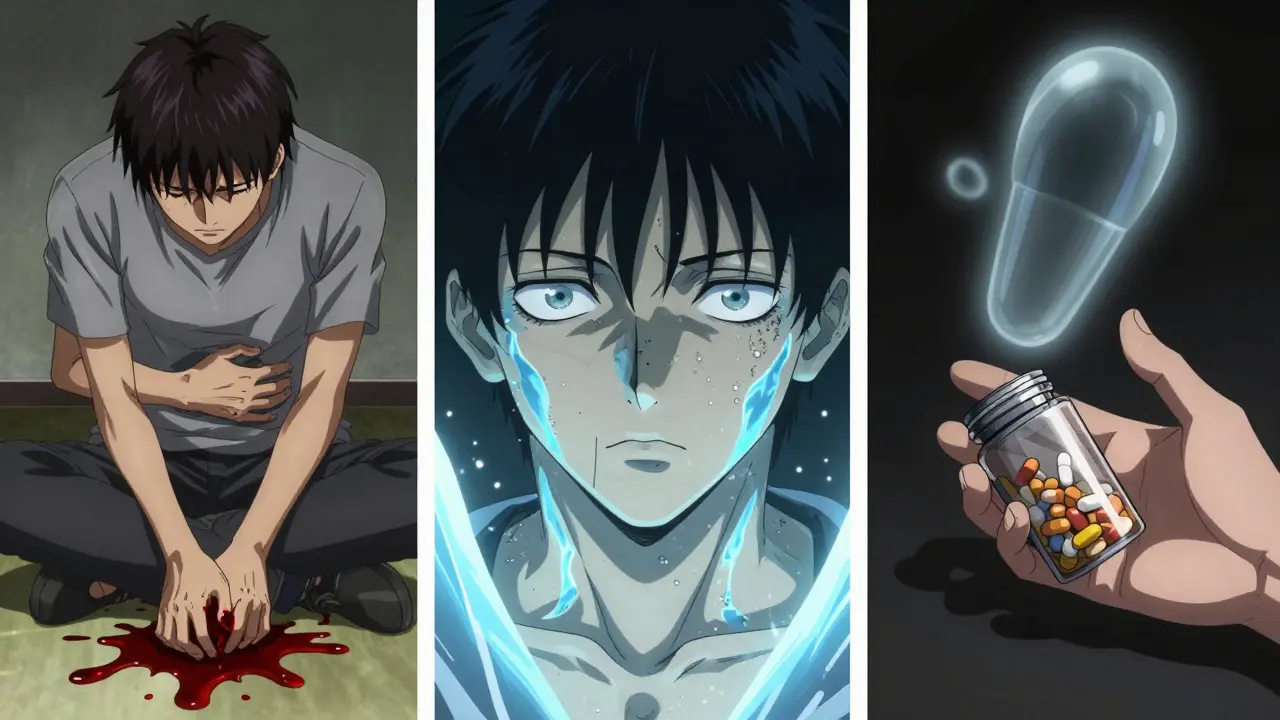
What Actually Works to Manage Symptoms?
There’s no magic cure, but science has given us proven tools.Medications That Help
- Buprenorphine: This is now the gold standard. It reduces withdrawal symptoms by 60-70%. It works by gently activating opioid receptors without the high. It’s given as a film under the tongue (Suboxone) and can be prescribed by any licensed doctor since the 2021 MAT Act removed old restrictions.
- Methadone: Used for decades in clinics. It’s a long-acting opioid that prevents withdrawal without causing euphoria. Patients usually take it daily under supervision. It’s not for everyone, but for many, it’s the only thing that keeps them stable.
- Naltrexone: Used after detox. It blocks opioids completely. It doesn’t help with withdrawal symptoms, but it reduces cravings and prevents relapse. Comes as a daily pill or monthly injection.
Non-Medical Support
Medication alone isn’t enough. Support matters.- Hydration: Vomiting and diarrhea drain fluids fast. Drinking 2-3 liters of oral rehydration solution daily helps prevent dangerous electrolyte imbalances. Plain water isn’t enough-you need sodium, potassium, and glucose.
- Nutrition: Loss of appetite is common. Small, easy meals with protein and complex carbs help the body heal. Bananas, rice, toast, and broth are often recommended.
- Cognitive Behavioral Therapy (CBT): Helps rewire the brain’s cravings. Studies show people who get CBT during withdrawal are twice as likely to stay sober long-term.
- Acupuncture: A 2019 meta-analysis found it reduced withdrawal symptoms by 25-30% in two-thirds of participants. It’s not a cure, but it helps with anxiety and pain.
Why Tapering Matters
If you’re on prescribed opioids, quitting cold turkey is the worst thing you can do. Doctors don’t just tell you to stop-they create a tapering plan. Reducing your dose by 10-20% every 3-7 days cuts withdrawal severity by up to 80%. A typical taper lasts 4-8 weeks for long-term users. This isn’t about being weak. It’s about science. Slowing the drop gives your brain time to adjust. Skipping this step increases the chance of relapse, hospitalization, and even death.What Happens If You Try It Alone?
Detoxing at home sounds brave. It’s risky. About 12-15% of people who detox without medical help develop serious electrolyte imbalances. Dehydration can lead to kidney failure. Severe vomiting can cause esophageal tears. Uncontrolled blood pressure spikes can trigger heart problems. And let’s not forget the psychological toll. Without support, the anxiety and depression during withdrawal can become unbearable. Many people return to opioids not because they want to, but because they can’t handle the pain-physical and emotional.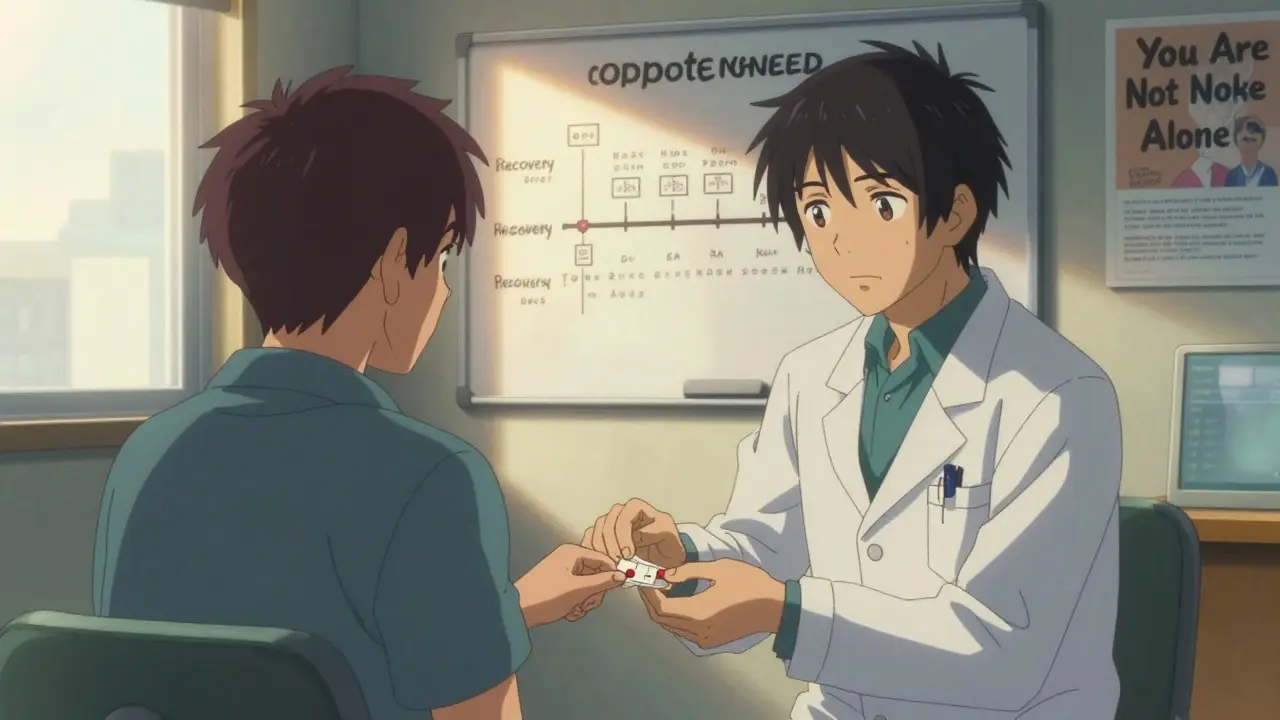
What Comes After Withdrawal?
Here’s the truth: withdrawal is just the beginning. Only 20-25% of people stay abstinent after detox if they don’t continue treatment. But if they stay on medication-assisted treatment (like buprenorphine or methadone) for 6-12 months, success rates jump to 40-60%. Recovery isn’t about surviving withdrawal. It’s about rebuilding your life. That means therapy, support groups, stable housing, and employment. Withdrawal management is step one. Long-term recovery is the whole journey.What’s New in 2026?
In 2023, a new extended-release buprenorphine formulation cut early withdrawal symptoms by 45% compared to the standard version. It’s not widely available yet, but it’s changing the game. Researchers are also testing genetic tests to predict how someone will respond to treatment. Variants in the CYP2B6 gene can tell doctors whether a person will metabolize buprenorphine quickly or slowly-helping them choose the right dose from day one. Meanwhile, the U.S. government is investing $30 million to expand withdrawal services in community clinics. The goal? Help 500,000 more people get care by 2025.Final Thoughts
Opioid withdrawal is hard. It’s messy. It’s painful. But it’s not hopeless. With the right support, the right medications, and the right timing, people get through it. And they go on to live full lives. The biggest mistake? Thinking you have to suffer through it alone. You don’t. Treatment works. Medications save lives. And asking for help isn’t weakness-it’s the strongest thing you can do.How long does opioid withdrawal last?
For short-acting opioids like heroin or oxycodone, physical symptoms usually peak at 72 hours and fade within 7-10 days. For long-acting opioids like methadone, symptoms start later, peak around day 3, and can last 14 days or more. Emotional symptoms like anxiety and depression may linger for weeks or months, even after physical symptoms are gone.
Is opioid withdrawal dangerous?
Withdrawal itself is rarely life-threatening for healthy adults. But complications like severe dehydration from vomiting and diarrhea, electrolyte imbalances, or cardiac stress can become dangerous without medical care. The biggest risk is relapse after detox-tolerance drops, and a previously safe dose can now cause a fatal overdose.
Can you detox from opioids at home?
It’s possible, but not recommended. Without medical supervision, the risk of dehydration, seizures, or relapse increases dramatically. Medical detox provides hydration, medications like buprenorphine, and monitoring to prevent complications. For anyone with long-term use, chronic illness, or mental health conditions, home detox is unsafe.
What’s the best medication for opioid withdrawal?
Buprenorphine is now the most effective and widely used medication. It reduces withdrawal symptoms by 60-70%, has a low risk of misuse, and can be prescribed by any licensed doctor. Methadone is also effective but requires daily clinic visits. Naltrexone is used after detox to prevent relapse but doesn’t help with withdrawal symptoms.
Do you need to stop opioids before starting treatment?
No. This is a common myth. Current guidelines from SAMHSA and the World Health Organization say you don’t need to go through withdrawal before starting medication-assisted treatment. Starting buprenorphine or methadone while still using opioids can prevent withdrawal entirely and increase retention in care.

Daniel Dover
February 15, 2026Been there. Cold turkey was hell. Buprenorphine saved me. No drama, no judgment-just got me through the worst 72 hours.
Now I’m two years clean. It’s not magic. It’s medicine.
Charlotte Dacre
February 16, 2026Oh wow, so now we’re treating addiction like it’s a bad flu? ‘Just hydrate and eat bananas’? Sure. Meanwhile, the system still locks people out of care unless they’re ‘ready.’
Yeah. Right. Keep telling yourself that.
Chiruvella Pardha Krishna
February 18, 2026The body does not lie. The mind constructs illusions of control. Opioid withdrawal is not merely a physiological event-it is the soul’s confrontation with its own dependency on artificial peace.
Science offers tools, but wisdom demands surrender.
One cannot heal what one refuses to name.
Mandeep Singh
February 19, 2026You people are so naive. Buprenorphine? Methadone? You think replacing one drug with another is treatment? That’s not recovery, that’s institutionalized dependency.
Real recovery means going cold turkey with grit, willpower, and prayer. No pills. No crutches. You want to live? Then suffer like a human being.
And stop pretending this is a medical issue-it’s a moral failure wrapped in a prescription.
Also, acupuncture? Really? That’s the best you’ve got? Come on.
And don’t get me started on the government throwing $30 million at this. We need prisons, not pity parties.
My cousin did it alone. No meds. No clinic. Just a mattress and a Bible. Now he’s a pastor. You think that’s luck? No. That’s discipline.
Stop infantilizing addicts. They need a boot to the backside, not a warm blanket and a Suboxone film.
Kaye Alcaraz
February 21, 2026Thank you for this clear, evidence-based breakdown.
It’s critical to emphasize that withdrawal is just the first step.
Medication-assisted treatment isn’t a compromise-it’s the foundation.
And yes, hydration and nutrition matter more than people admit.
Every person who reads this and reaches out for help? That’s a life saved.
Keep sharing this.
Sarah Barrett
February 21, 2026I’ve seen withdrawal from the other side-nursing a brother through it. It’s like watching someone dissolve. Not metaphorically. Literally. Skin pale, eyes hollow, hands shaking like they’re holding a live wire.
And the silence after? That’s the worst part.
Not the vomiting. Not the cramps.
But the way the room feels when the screaming stops and no one knows what to say next.
Medication isn’t giving up. It’s giving yourself a chance to hear your own thoughts again.
Erica Banatao Darilag
February 22, 2026thank you for writting this. i had no idea about the cows scale or the cyp2b6 gene stuff.
also the part about not needing to be clean before starting buprenorphine? that changed everything for me.
my friend was told to detox first and she relapsed within 48 hours.
if only someone had told her this sooner.
please keep spreading this info.
Virginia Kimball
February 23, 2026I’m so proud of everyone who’s done this. Seriously.
You don’t get a medal for surviving withdrawal.
You get a whole new life.
And if you’re reading this and thinking about quitting? Don’t wait.
Call a clinic. Text a friend. Send a DM.
You’re not broken.
You’re becoming.
Kapil Verma
February 24, 2026India has 15 million opioid users. You think your American clinic model works here? No.
We don’t have buprenorphine in rural villages. We have chai, prayer, and family.
Stop exporting your soft solutions to the Global South.
Real strength is not in pills. It’s in culture.
And we don’t need your money. We need your silence.