
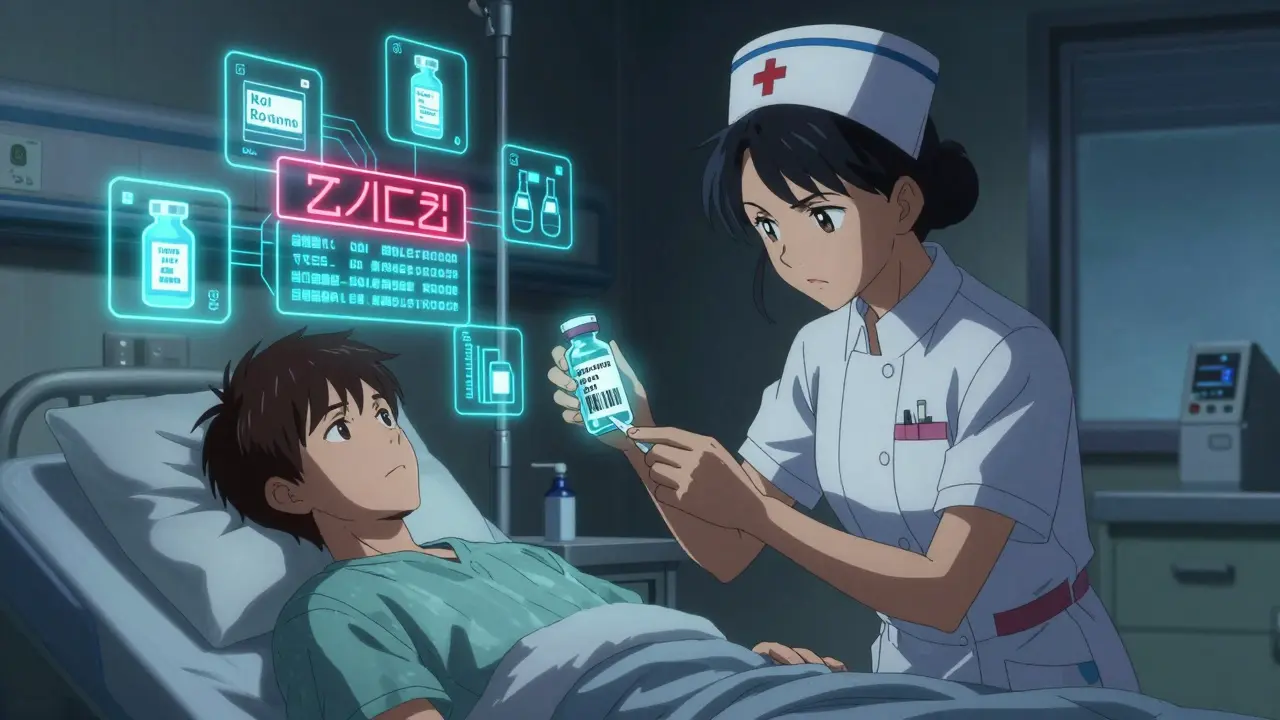
Every year, millions of people in the U.S. get the wrong medication, wrong dose, or wrong instructions - not because of bad intent, but because of broken systems. Medication errors happen more often than most people realize, and where they happen matters. Hospitals and retail pharmacies both dispense drugs, but the way errors occur, get caught, and hurt patients is completely different. Understanding these differences isn’t just for doctors or pharmacists - it’s critical for anyone taking meds at home or in a hospital.
How Often Do Errors Happen?
In hospitals, medication errors are common. One study found that nearly 1 in every 5 doses given to patients contains some kind of mistake. That’s 20%. These errors can happen at any point: when a doctor writes the order, when a pharmacist fills it, or when a nurse gives it to the patient. The most frequent errors? Wrong timing, wrong dose, or the wrong drug entirely. Nurses often catch these before the patient even takes it - but not always. In retail pharmacies, the numbers look much better on paper. Studies show about 1.5% of prescriptions filled have a dispensing error. That’s 15 errors per 1,000 prescriptions. Sounds low? Multiply that by 3 billion prescriptions filled each year in the U.S., and you get 45 million errors. That’s not a small number. The difference? In a hospital, there are multiple people checking the med before it reaches the patient. In a pharmacy, the pharmacist fills it, the technician checks it, and then it goes straight to you - no one else is watching.What Kind of Mistakes Happen?
In community pharmacies, the top errors are simple but deadly: giving the wrong drug, wrong dose, or wrong instructions. One case from the AHRQ involved a patient prescribed estradiol - one tablet twice a week - but the label said twice a day. The patient took it daily for weeks and ended up with severe side effects. That’s not rare. Another common error? Confusing similar-sounding drugs like hydroxyzine and hydralazine. One’s for anxiety, the other for high blood pressure. Mix them up, and you could have a medical emergency. In hospitals, the errors are more complex. A nurse might give insulin at the wrong time because the chart wasn’t updated. Or a patient gets a high-dose antibiotic meant for someone else because of a barcode scan failure. These mistakes often involve multiple steps - and because patients are sicker, the consequences are more dangerous. A wrong dose of blood thinner in a hospital can cause internal bleeding within hours. In a pharmacy, the same mistake might take days to show up - but by then, it’s harder to trace.Why Do These Errors Happen?
In retail pharmacies, most errors come from human cognitive overload. Pharmacists are juggling 250+ prescriptions a day, often under time pressure. A distracted tech might grab the wrong bottle. A confusing label from the doctor’s office might be misread. Even automated systems can fail - if a drug looks similar on screen, or if the system doesn’t flag a dangerous interaction, the error slips through. AHRQ found that 80% of pharmacy errors are tied to how the workplace is organized, how tasks are designed, or how technology is used - not because someone was careless. In hospitals, the root causes are different. Communication breakdowns between doctors, nurses, and pharmacists are common. A doctor might type an order too fast. A nurse might miss a change in the electronic record. Staffing shortages mean nurses are rushing between 6-8 patients, and checking meds becomes a checkbox, not a safety step. And unlike pharmacies, hospitals don’t always have a clear line of accountability. Who’s responsible when a drug error happens? The prescriber? The pharmacist? The nurse? The system? Everyone points fingers.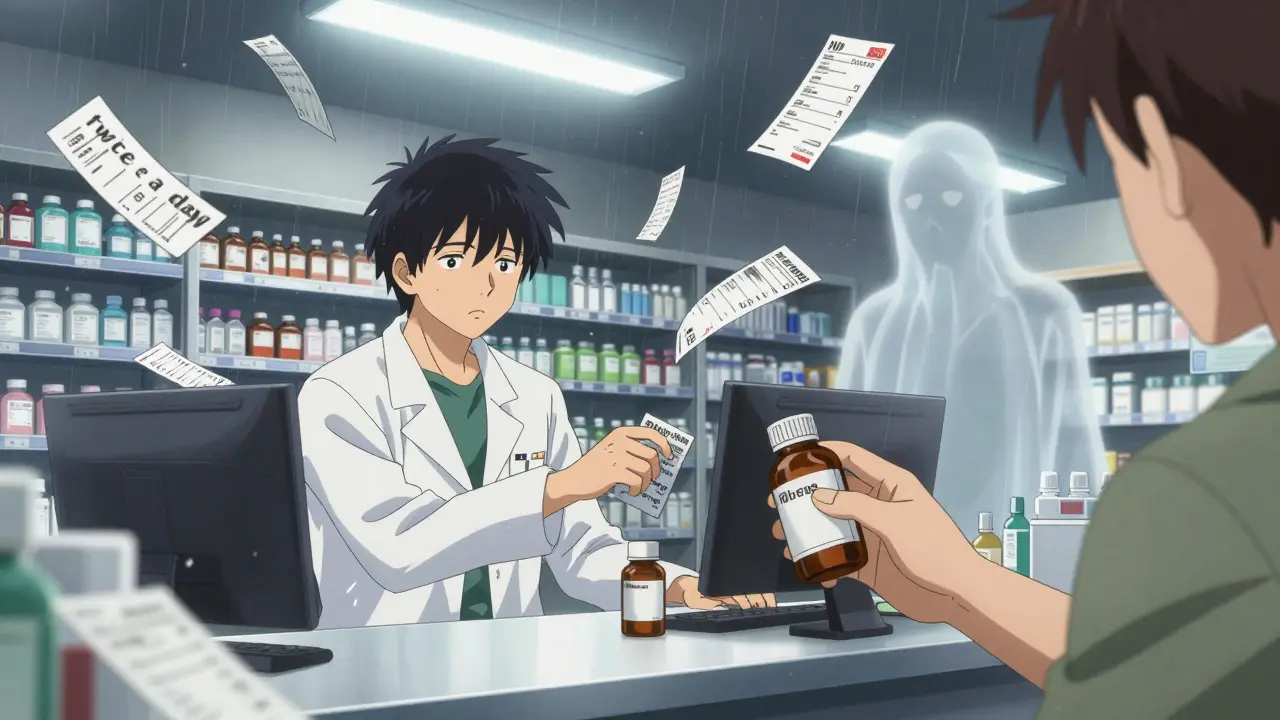
Who Catches the Mistakes?
This is the biggest difference. In hospitals, there are layers of checks. The pharmacist reviews the order. The nurse scans the barcode before giving the drug. Sometimes, a second nurse double-checks high-risk meds like insulin or heparin. If something’s wrong, it can be caught before the patient swallows it. In a retail pharmacy? You’re the last line of defense. The pharmacist might spot a problem - but only if they’re not backed up. If you don’t read the label, or if you assume it’s right because it’s from the same pharmacy you always use, the error goes unnoticed. A 2007 NIH study found that for every one dispensing error that reached a patient, there were two near-misses - meaning someone almost got hurt, but caught it in time. That’s not luck. That’s a system that’s barely holding together.What Happens When Errors Go Undetected?
In hospitals, even when errors reach patients, they’re often caught quickly because the patient is being monitored. A sudden drop in blood pressure? A change in mental status? Nurses are trained to respond. But because hospital patients are already sick, a medication error can push them into organ failure, sepsis, or death. The cost of treating just the injuries from hospital medication errors? At least $3.5 billion a year. In retail pharmacies, errors are more likely to go unnoticed until the patient feels bad - maybe days later. Someone on warfarin gets the wrong dose and ends up in the ER with a brain bleed. A diabetic gets too much insulin and passes out. These cases often lead to hospitalization - meaning the pharmacy error becomes a hospital problem. The total cost of all medication-related harm in the U.S. exceeds $177 billion annually. That’s not just medical bills - it’s lost wages, emergency care, long-term rehab, and emotional trauma.How Are Errors Reported?
Hospitals have formal reporting systems. If a nurse makes a mistake, they log it in an electronic system. No blame. No punishment. Just data. Big hospitals report 100+ errors per month - not because they’re unsafe, but because they’re honest. That data helps them fix problems before they hurt someone. Retail pharmacies? Not so much. Until recently, most didn’t have mandatory reporting. Some states, like California, now require pharmacies to report errors to the board of pharmacy. But nationally? Underreporting is the norm. The FDA gets over 100,000 reports a year - but experts believe that’s less than 10% of what actually happens. People are afraid to speak up. Pharmacists worry about losing their license. Patients don’t know what to report. And when nothing changes, mistakes keep happening.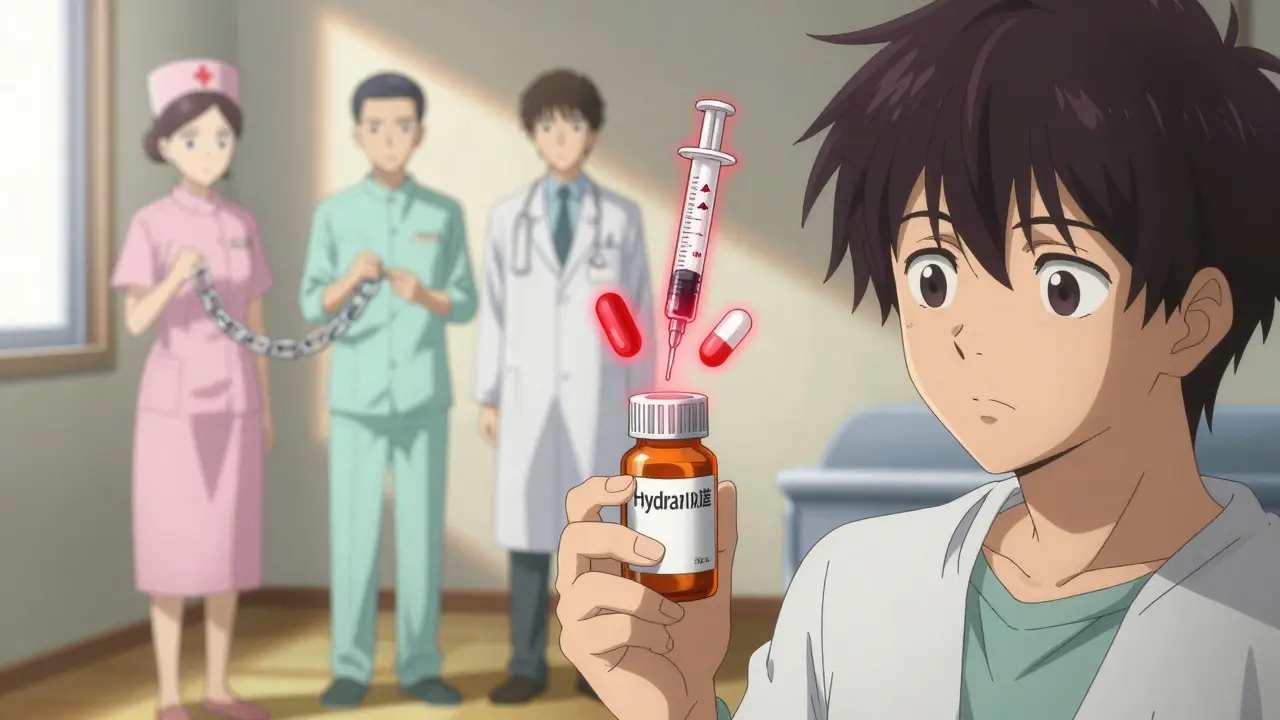
What’s Being Done to Fix This?
Hospitals have made big strides. Barcode scanning systems cut errors by up to 86%. Electronic prescribing reduces handwriting mistakes. Integrated systems mean the pharmacist sees the full medical record - not just the prescription slip. Mayo Clinic cut hospital medication errors by 52% after linking their EHR and pharmacy systems. Retail pharmacies are catching up. CVS Health rolled out AI-powered verification in 2022 and reduced dispensing errors by 37%. The technology flags mismatches between the doctor’s order and what’s being filled - like when a 70-year-old gets a high-dose opioid prescribed for a young adult. The University of California San Francisco piloted AI that reduced transcription errors by 63%. But technology alone won’t fix this. The real fix is culture. Hospitals have learned that blaming people doesn’t stop errors - studying systems does. Retail pharmacies need to adopt the same mindset. Encourage staff to report near-misses. Reward transparency. Train pharmacists to slow down during peak hours. And most importantly - make sure patients know to double-check their meds.What Can You Do?
You don’t have to wait for the system to fix itself. Here’s what you can do right now:- Always read the label - even if you’ve taken the drug before.
- Ask the pharmacist: “Is this the same as last time?”
- Keep a list of all your meds - including doses and why you take them.
- If something feels off - a new side effect, a different pill shape - call your doctor or pharmacist.
- Don’t assume your pharmacy got it right. Mistakes happen - even in the best places.
Medication safety isn’t just the job of doctors and pharmacists. It’s your job too. The more you know, the less likely you are to become a statistic.
Are medication errors more common in hospitals or pharmacies?
Medication errors occur more frequently in hospitals - about 20% of doses have some kind of mistake. But in retail pharmacies, errors are less frequent (around 1.5%) yet more likely to reach patients undetected because there are fewer safety checks between the pharmacist and the patient.
What’s the most common type of pharmacy error?
The most common pharmacy error is a transcription mistake - when the instructions on the label don’t match what the doctor wrote. For example, a prescription for one pill twice a week gets written as one pill twice a day. This often happens because of unclear handwriting, rushed work, or confusing drug names.
Why don’t pharmacies catch more errors before they reach patients?
Pharmacies are under extreme pressure to fill prescriptions quickly - often 200 to 300 per day. Staffing shortages, high workloads, and poorly designed technology make it hard to slow down. Unlike hospitals, there’s no nurse double-checking the drug before you take it. The patient becomes the final safety net - and most people don’t know what to look for.
Can technology reduce medication errors?
Yes. Barcode scanning in hospitals has cut errors by up to 86%. AI systems in pharmacies now flag dangerous mismatches - like a high-dose opioid for an elderly patient. CVS and Mayo Clinic both saw major reductions after implementing these tools. But tech only works if it’s used well and paired with a culture that encourages reporting, not hiding, mistakes.
What should I do if I think I got the wrong medication?
Don’t take it. Call your pharmacist right away and ask them to verify the prescription with your doctor. Keep the bottle and the original label. If you’ve already taken it and feel unwell - nausea, dizziness, chest pain, confusion - go to the ER or call 911. It’s better to be safe than sorry. Many errors are caught before they cause harm - but only if someone speaks up.
Are some drugs more likely to cause errors than others?
Yes. High-risk drugs like insulin, blood thinners (warfarin, apixaban), opioids, and chemotherapy agents are involved in the most serious errors. Even small mistakes with these can lead to death. Drugs with similar names - like hydroxyzine and hydralazine - also cause frequent mix-ups. Always double-check these medications.
Melodie Lesesne
January 16, 2026Really glad someone broke this down like this. I’ve had a cousin almost get killed by a mix-up with warfarin at the pharmacy - they gave her the wrong strength and she ended up in the ER with a brain bleed. No one caught it until she started vomiting blood. I never thought about how the system just dumps responsibility on the patient. We’re not doctors. We shouldn’t have to be the last line of defense.
But seriously, read your labels. Always. Even if it’s the same pill you’ve taken for years. That’s not paranoia, that’s survival.
Corey Sawchuk
January 18, 2026Been a pharmacy tech for 8 years. 250 scripts a day. No breaks. No backup. Sometimes I’m the only one in the back. You think I want to give someone the wrong drug? Nah. But when your hands are shaking from caffeine and stress and the printer jams for the 3rd time and the doctor’s handwriting looks like hieroglyphics… mistakes happen. Not because we’re lazy. Because the system’s broken.
And yeah, we don’t report most of ‘em. You think the board cares? They just want numbers to look good. We’re the ones who get blamed when it goes south.
Rob Deneke
January 20, 2026Look I get the fear but don’t turn this into a horror story. Hospitals have way more errors because they’re dealing with people who are already dying. Pharmacies are just filling scripts. The fact that 98.5% of them are right is actually impressive.
Do your part. Read the label. Ask questions. Don’t be passive. You’re not helpless. Just stop acting like you are.
Bianca Leonhardt
January 21, 2026Oh wow. Another ‘patients are the last line of defense’ guilt trip. Like we’re all supposed to be pharmacists now? I’m a single mom who works two jobs and has three kids. You want me to memorize every drug interaction? You want me to know the difference between hydroxyzine and hydralazine? That’s not safety. That’s abuse.
And don’t even get me started on ‘technology fixes everything.’ I’ve seen AI systems flag things that weren’t even errors. Now the pharmacist wastes 10 minutes on a false alarm while my prescription sits there. Meanwhile, my blood pressure keeps climbing.
This isn’t about me being responsible. It’s about you fixing the damn system before another person dies because you couldn’t afford a second pharmacist.
Christina Bilotti
January 22, 2026Oh honey. You really think a barcode scanner is going to fix the fact that your doctor can’t write a prescription without mixing up ‘20mg’ and ‘200mg’? Or that your pharmacist is just too busy to read? This isn’t a tech problem. It’s a ‘we stopped caring about human beings in healthcare’ problem.
And let’s be real - most people don’t even know what their meds are for. I’ve seen patients take antidepressants because they ‘felt sad’ and then blame the pharmacy when they get dizzy. No. No. No. You don’t get to outsource your brain to a pill bottle.
Stop pretending this is a system failure. It’s a culture of ignorance.
brooke wright
January 23, 2026I took my grandma’s blood pressure med and it was a different color. I called the pharmacy and they said ‘oh that’s just a different brand, same thing.’ I said ‘but the label says 10mg and this says 25mg’ and they said ‘yeah but the doctor changed it.’ I didn’t know the doctor changed it. I didn’t get a call. I didn’t get a new label. I just got a pill that made her dizzy for 3 days.
And now I’m terrified to take any med from any pharmacy ever again. I don’t trust anyone. Not the doctor. Not the pharmacist. Not the system. Not even my own memory. What’s left?
My grandma’s fine now. But I cried for a week. And I still check every bottle like it’s a bomb.
vivek kumar
January 25, 2026Interesting data, but the root cause is systemic underinvestment in healthcare infrastructure. In India, we have similar issues - but the difference is that in public hospitals, pharmacists are overloaded by 400% and have zero digital support. In the U.S., you have tech, but you lack the human bandwidth to use it properly. It’s not that the tools are bad - it’s that the workflow is designed to fail.
Also, the term ‘medication error’ is misleading. These aren’t errors. They’re preventable harms. We need to stop sanitizing language. If a patient dies because a label was misprinted, that’s negligence, not an ‘error.’
Nick Cole
January 25, 2026I work in a hospital pharmacy. We catch maybe 80% of errors before they leave the building. But here’s the thing - the ones that slip through? They’re usually because the doctor changed the dose in the chart but didn’t re-order it. Or the nurse scanned the wrong patient’s wristband. The tech works. The people don’t always follow it.
And yeah, we report everything. No blame. Just data. But you know what? We also have 2 pharmacists per shift, 10 nurses, and 2 techs checking everything. That’s not the norm. That’s the exception.
Most places? They’re running on fumes. You can’t fix a broken system with a checklist.
Riya Katyal
January 27, 2026Oh please. You think retail pharmacies are the villains? Let’s talk about the doctors who write ‘take 1 tablet twice a day’ and then scribble ‘as needed’ next to it. Or the ones who prescribe 5 different meds that all interact like a chemical bomb.
And don’t even get me started on patients who take 12 pills and then blame the pharmacy when they feel weird. You didn’t tell your doctor you were on St. John’s Wort. You didn’t tell your pharmacist you were drinking grapefruit juice. You didn’t even know what half the pills were for.
Stop making this about the pharmacy. It’s about the entire circus.
Henry Ip
January 27, 2026Real talk - if you’re on insulin or blood thinners, you owe it to yourself to keep a physical list. Not on your phone. Not in a note app. On paper. In your wallet. Because when you’re in the ER and you’re confused, they’ll ask you what you take. And if you don’t know, they’ll guess.
I’ve seen it too many times. Someone comes in after a fall, they’re on warfarin, and no one knows what dose. They end up getting a CT scan, then a transfusion, then a 5-day hospital stay.
It’s not hard. Write it down. Update it. Show it to every provider. That’s your superpower.
And if you’re a pharmacist? Speak up. Even if it’s just one extra minute. One more check. It matters.
waneta rozwan
January 29, 2026OMG. I JUST REALIZED I’VE BEEN TAKING MY BLOOD PRESSURE MED WRONG FOR 3 YEARS. I THOUGHT IT WAS ONCE A DAY. IT WAS TWICE. I’VE BEEN FEELING WEIRD BECAUSE I WASN’T TAKING ENOUGH. I JUST RAN TO THE PHARMACY AND THEY SAID ‘OH YEAH, WE CHANGED IT LAST MONTH BUT WE DIDN’T CALL YOU.’
I’M SO ANGRY. I’M SO SCARED. I’M SO RELIEVED I FOUND OUT BEFORE I HAD A STROKE.
WHY DOESN’T ANYONE TELL YOU THIS? WHY IS IT MY JOB TO FIGURE OUT IF THE PILLS LOOK RIGHT? WHY ISN’T THERE A TEXT ALERT? WHY DOESN’T THE PHARMACY CALL IF THEY CHANGE THE DOSE?
I’M NOT EVEN MAD AT THEM. I’M MAD AT THE SYSTEM THAT LETS THIS HAPPEN.
Nicholas Gabriel
January 30, 2026Look - I’m not saying this to scare anyone, but I’ve been a pharmacist for 15 years, and I’ve seen more near-misses than I can count. One time, a patient came in for a new antibiotic - and the label said ‘take 1 tablet every 8 hours.’ The doctor wrote ‘every 12.’ The AI flagged it - but the tech overrode it because ‘it’s just a typo.’ I caught it 30 minutes later when the patient called back, confused.
That’s why I always say: if you’re on anything high-risk - insulin, warfarin, chemo, opioids - ask for a printed handout. Ask the pharmacist to explain it. Take notes. Bring someone with you. Don’t just nod and walk out.
And if you’re a pharmacist? Don’t override the alerts. Don’t rush. Don’t assume. One second of hesitation could save a life.
This isn’t about blame. It’s about care.
Cheryl Griffith
January 31, 2026I lost my dad to a medication error. He was in the hospital. They gave him the wrong dose of a diuretic. He went into kidney failure. They didn’t catch it for 18 hours. He was fine the night before. He was gone by morning.
I don’t blame the nurses. I don’t blame the doctors. I blame a system that treats people like numbers. A system that measures efficiency over humanity.
I don’t want anyone else to go through this. So I tell everyone I know: read the label. Ask questions. Write things down. If something feels off - trust it. Even if you’re wrong. Even if you feel silly.
Because sometimes, being ‘silly’ is the only thing that keeps you alive.
Melodie Lesesne
February 2, 2026Wow. I didn’t know your dad passed like that. I’m so sorry. I’ve been thinking about what you said - and I think you’re right. We’re all just trying to survive the system. But maybe… if we all speak up a little more? Even just one person at a time? It adds up.
I’m going to start handing out those little med lists to my friends. Even if they think it’s overkill. Better overkill than a funeral.