

Antihistamine Side Effect Risk Calculator
Assess Your Antihistamine Side Effect Risk
Many people reach for antihistamines like Benadryl for allergies, colds, or even to help them sleep. But what they don’t realize is that these common meds are doing more than just blocking histamine-they’re also interfering with a key chemical in your body called acetylcholine. This interference causes what doctors call anticholinergic effects: dry mouth, constipation, and trouble urinating. These aren’t rare side effects. They’re common, often ignored, and sometimes dangerous-especially as you get older.
Why First-Generation Antihistamines Are the Main Culprit
Not all antihistamines are the same. There are two main types: first-generation and second-generation. The first-generation ones-like diphenhydramine (Benadryl), chlorpheniramine, and promethazine-were developed in the 1940s. They were designed to block histamine, but they also happen to block acetylcholine receptors. That’s not a bug; it’s a design flaw. These drugs were made from compounds that naturally affected both systems, and back then, nobody thought much about it. Today, we know better. Second-generation antihistamines like cetirizine (Zyrtec), loratadine (Claritin), and fexofenadine (Allegra) were engineered to stay out of the brain and avoid those extra receptors. They work just as well for allergies but don’t mess with your saliva, gut, or bladder the same way. Here’s the numbers: at a standard 25 mg dose, diphenhydramine causes dry mouth in about 28% of users. Cetirizine? Only 4%. Constipation hits 15-20% of people taking first-gen meds, but just 3-5% on second-gen. For urinary issues, especially in older men, the risk jumps from under 1% with newer drugs to 5-8% with older ones.How Anticholinergic Effects Actually Happen
Your body uses acetylcholine to control everything from how much you salivate to how your bladder contracts. When antihistamines block the M3 receptors in your salivary glands, saliva production drops by 60-70%. That’s why your mouth feels like cotton, even if you’ve drunk a full bottle of water. In your gut, blocking M2 and M3 receptors slows down the natural muscle contractions that move food along. Transit time doubles. That’s constipation-not just feeling a little backed up, but needing laxatives or enemas to get things moving. A 2020 study showed this effect is real and measurable: people on first-gen antihistamines had bowel movements half as often as those on newer ones. And then there’s the bladder. Acetylcholine tells the detrusor muscle to squeeze and empty the bladder. When antihistamines block that signal, the muscle weakens. At the same time, the sphincter tightens up. The result? You feel the urge but can’t fully go. For men with enlarged prostates, this isn’t just uncomfortable-it can lead to acute urinary retention, which requires a catheter. Studies show 31% of men with moderate to severe prostate symptoms develop this within 48 hours of taking diphenhydramine.
Who’s Most at Risk?
It’s not just seniors. But if you’re over 65, your body handles these drugs differently. Your liver and kidneys don’t clear them as fast. Your brain is more sensitive to the disruption. And if you’re already taking other medications that have anticholinergic effects-like some antidepressants, bladder pills, or sleep aids-the effects stack up. The American Geriatrics Society calls first-gen antihistamines “potentially inappropriate” for older adults. Why? Because they’re linked to a 54% higher risk of dementia over seven years. That’s not a small increase. It’s dose-dependent: every extra year of use beyond 90 daily doses raises the risk by 20%. That’s why doctors in Europe now say: avoid them entirely after age 65. Even younger people aren’t safe if they’re using these drugs regularly. A Reddit thread with over 300 comments from people using Benadryl daily had 77% reporting severe dry mouth, 45% saying they got constipated, and 12% of men describing urinary problems. These aren’t outliers. They’re the norm.What You Can Do Instead
Switching to a second-generation antihistamine is the easiest fix. Loratadine, cetirizine, and fexofenadine are all available over the counter. They cost a bit more-$12-$18 for a month’s supply versus $4-$6 for generic diphenhydramine-but they don’t leave you parched, backed up, or stuck in the bathroom. If you’ve been using Benadryl to sleep, try melatonin instead. It doesn’t cause anticholinergic effects, and it’s not addictive. If you need something stronger, talk to your doctor about non-anticholinergic sleep aids. There are options. For dry mouth, chewing sugar-free gum with xylitol helps. It boosts saliva flow by 40-60% in minutes. For constipation, a daily 17g dose of polyethylene glycol (Miralax) cuts the risk in half. And if you’re a man with prostate issues, avoid first-gen antihistamines completely. The American Urological Association says if your prostate symptom score is above 8, you’re at serious risk.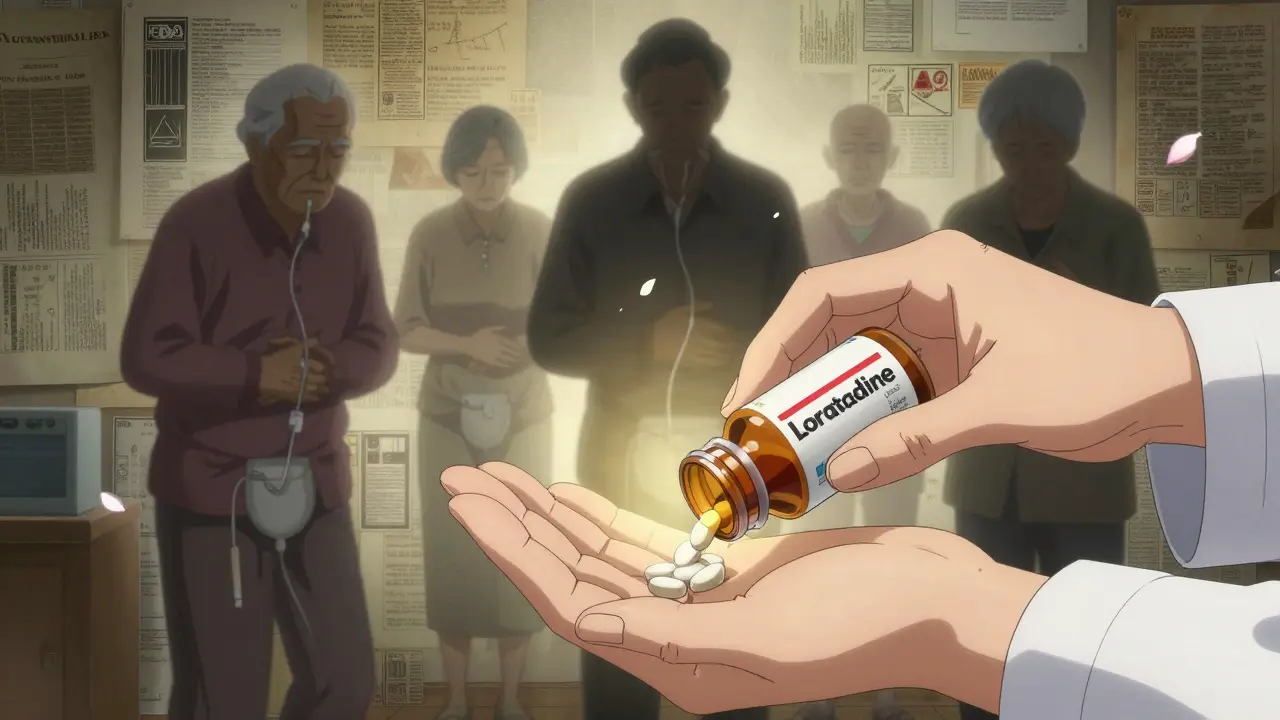
The Bigger Picture: Why This Matters
Hospitals have started removing diphenhydramine from their formularies. Mayo Clinic got rid of it entirely in 2022 because so many older patients developed delirium after taking it. The FDA added a dementia warning to Benadryl labels in 2021. The European Medicines Agency banned first-gen antihistamines in kids under two. And the market is shifting fast: second-gen antihistamines now make up 78% of sales and are growing at over 6% a year. First-gen? Declining by 3.5% annually in older adults. Even if you’re young and healthy now, using these drugs daily for years could catch up with you. The Alzheimer’s Association is funding a $2.5 million study to track whether switching from Benadryl to Zyrtec slows cognitive decline. Results won’t be in until 2026, but the early signs are clear: the longer you use them, the higher your risk.What to Ask Your Doctor
If you’re taking any antihistamine regularly, ask:- Is this a first-generation or second-generation drug?
- Could this be causing my dry mouth, constipation, or trouble peeing?
- Is there a safer alternative that won’t affect my brain or bladder?
- Am I taking other meds that could make these side effects worse?
Can antihistamines cause dementia?
Yes, long-term use of first-generation antihistamines like diphenhydramine is linked to a 54% increased risk of dementia over seven years, according to a study published in JAMA Internal Medicine. The risk rises with each additional year of use, especially if you take more than 90 daily doses over time. Second-generation antihistamines like cetirizine and loratadine show no such link.
Is Benadryl safe for older adults?
No. The American Geriatrics Society explicitly lists diphenhydramine and other first-generation antihistamines as potentially inappropriate for adults over 65. They increase the risk of confusion, falls, urinary retention, and constipation. Even short-term use can trigger delirium in older patients. Safer alternatives like loratadine or cetirizine are recommended instead.
Why do antihistamines cause dry mouth?
First-generation antihistamines block M3 muscarinic receptors in the salivary glands, reducing saliva production by 60-70%. This isn’t dehydration-it’s a direct pharmacological effect. Chewing sugar-free gum with xylitol can help stimulate saliva flow, but the only real solution is switching to a second-generation antihistamine.
Can I take antihistamines if I have an enlarged prostate?
Avoid first-generation antihistamines completely. They can cause acute urinary retention, which may require emergency catheterization. Studies show 31% of men with moderate to severe prostate symptoms experience this within 48 hours of taking diphenhydramine. Second-generation antihistamines like fexofenadine are safe and recommended.
Are there any antihistamines without anticholinergic effects?
Yes. Second-generation antihistamines like cetirizine, loratadine, fexofenadine, and levocetirizine have minimal to no anticholinergic activity at standard doses. Newer options like olopatadine nasal spray (Patanase) show no measurable anticholinergic effects in clinical studies. These are the preferred choices for long-term use.
If you’ve been using an older antihistamine for years and notice dry mouth, constipation, or trouble urinating, don’t brush it off. These aren’t just annoyances-they’re warning signs. Talk to your doctor. Switch to a safer option. Your brain, your bladder, and your gut will thank you.


Michael Burgess
January 3, 2026Been using Benadryl for years to sleep-switched to melatonin last year after reading this. My dry mouth? Gone. Constipation? No more. I didn’t even realize how bad it was until it just… stopped. These meds are sneaky. Don’t let ‘over-the-counter’ fool you.
Joy F
January 4, 2026Let’s be real-the pharmaceutical industry doesn’t care if you’re constipated or mentally foggy as long as you keep buying. First-gen antihistamines were designed in the 40s when nobody gave a damn about long-term neurotoxicity. Now we’ve got a dementia epidemic, and they’re still on the shelf next to the gum. Capitalism isn’t healthcare-it’s a slow poison with a brand logo.
And don’t even get me started on how the FDA only acted after 30 years of peer-reviewed studies. They don’t protect you. They protect profits.
That $2.5M Alzheimer’s study? It’s a PR stunt. The damage is already done for millions. We’re just now catching up to what doctors in Europe knew in 2010.
Every time someone says ‘it’s just a little drowsiness,’ they’re normalizing cognitive erosion. This isn’t a side effect-it’s a slow-motion lobotomy with a pharmacy receipt.
And yes, I’ve seen grandmas on Zyrtec after years of Benadryl. Their eyes cleared up. Their balance improved. Their memory came back. It’s not magic. It’s pharmacology.
The real tragedy? People think ‘natural remedies’ are the answer. No. The answer is evidence-based medicine. Not turmeric. Not acupuncture. Not vibes. It’s switching to fexofenadine and never looking back.
They call it ‘anticholinergic burden.’ I call it corporate negligence dressed in white coats.
And if you’re still using diphenhydramine because ‘it’s cheaper’-you’re paying in dementia points. The math doesn’t lie.
Stop romanticizing old-school meds. They’re not nostalgic. They’re neurotoxic.
This isn’t opinion. It’s a meta-analysis.
And if you’re a doctor still prescribing this to seniors? You’re complicit.
And yes-I’m angry. You should be too.
JUNE OHM
January 5, 2026EVERYTHING IS A GOVERNMENT PLOT 🤡 I mean, why do you think they let these drugs stay on shelves? They WANT us to forget our own names so we don’t question the system. 😈 The FDA is just a front for Big Pharma + the Illuminati. 🌍👁️🗨️ They’re slowly turning us into zombies so we’ll buy more vaccines, more pills, more… you get it. 😷💊 #WakeUpSheeple
Lori Jackson
January 5, 2026How is anyone still using Benadryl? It’s like choosing to drink lead paint because it’s cheaper than bottled water. You’re not ‘saving money’-you’re buying a one-way ticket to cognitive decline with a side of urinary retention. This isn’t just irresponsible-it’s a failure of basic self-care. If you’re using this daily, you’re not a patient. You’re a statistic waiting to happen.
Sarah Little
January 5, 2026Anticholinergic burden is a well-documented pharmacokinetic phenomenon, particularly in geriatric populations with polypharmacy. The M3 receptor antagonism in salivary and detrusor musculature is dose-dependent and cumulative. The 2020 JAMA Internal Medicine longitudinal cohort study demonstrated a clear exposure-response relationship with dementia incidence, with a hazard ratio of 1.54 (95% CI: 1.23–1.92) for >90 DDDs/year. The pharmacoeconomic burden is understudied, but the clinical implications are non-trivial.
Second-generation agents exhibit negligible CNS penetration due to P-glycoprotein efflux and lower lipophilicity-this is not merely ‘marketing.’ It’s structural pharmacology. Loratadine’s pKa and logP values are optimized for peripheral selectivity. This is why they’re classified as ‘non-sedating’-not because they’re weaker, but because they’re smarter.
And yes, the American Geriatrics Society Beers Criteria is not a suggestion. It’s a clinical imperative. If you’re over 65 and still taking diphenhydramine, your prescriber is either negligent or unaware of the evidence base.
Chewing gum? That’s a Band-Aid. The solution is pharmacotherapy de-escalation.
Also-stop calling it ‘just a sleep aid.’ That’s not a medical indication. That’s self-medication with neurotoxic consequences.
Ian Detrick
January 6, 2026It’s wild how we treat our bodies like machines we can just tweak with pills. We pop Benadryl like candy because it makes us sleepy, but we forget it’s shutting down a system that’s been running for 500 million years. Acetylcholine isn’t just about bladder control-it’s memory, focus, movement, heartbeat. When you block it, you’re not just dry-mouthed-you’re slowly turning off parts of yourself.
I used to think ‘natural’ meant ‘better.’ Now I know it’s about science. Zyrtec doesn’t make you feel like a dried raisin. It just works. And that’s okay.
We don’t need more pills. We need more awareness.
Brittany Wallace
January 7, 2026Thank you for writing this. I’m 42 and have been using Benadryl for years for allergies and sleep. I didn’t realize how much it was affecting me until I started having trouble peeing and felt like my brain was wrapped in cotton. Switched to cetirizine last month. My mouth feels like a river again. I can think clearer. I’m not scared to go to the bathroom anymore. 🙏
It’s not about being perfect. It’s about being informed. And you just gave me that.
Kerry Howarth
January 8, 2026Switched to fexofenadine 6 months ago. No more dry mouth. No more constipation. No more midnight bathroom battles. Worth every penny. Your body doesn’t lie.
Tiffany Channell
January 8, 2026People who use Benadryl as a sleep aid are just lazy. If you can’t sleep without a drug that wrecks your brain, maybe you should fix your lifestyle instead of poisoning yourself. This isn’t a medical issue-it’s a personal failure.
Philip Leth
January 9, 2026Yo, I’m from Texas, and we don’t mess around here. My grandpa used to take Benadryl for everything. One day he couldn’t pee for three days. Got a catheter. Never took it again. He’s 82 now and still hiking. He says, ‘Son, if it’s got ‘Diphenhydramine’ on the label, it’s got ‘DANGER’ written in invisible ink.’
Just sayin’.
veronica guillen giles
January 10, 2026Oh, so now we’re shaming people for using over-the-counter meds? 🙄 Let me guess-next you’ll tell me not to take ibuprofen because it might cause kidney damage? Wake up. Not everyone has the luxury of $18/month for ‘premium’ antihistamines. Some of us are working two jobs and taking what’s cheap. Your ‘awareness’ doesn’t pay the bills.
And yes-I know the science. But you don’t get to act like you’re morally superior because you can afford Zyrtec.
innocent massawe
January 12, 2026Back home in Nigeria, we don’t have this problem because we don’t have Benadryl everywhere. We use neem leaves or ginger tea. Maybe we’re not ‘modern,’ but we’re not losing our minds either. 🌿
Angela Goree
January 12, 2026AMERICA IS BECOMING A COUNTRY OF ZOMBIES BECAUSE OF THIS! FIRST IT WAS SUGAR, THEN IT WAS SODIUM, NOW IT’S BENADRYL! THE GOVERNMENT IS LETTING THIS HAPPEN BECAUSE THEY WANT US TO BE DUMB AND CONTROLLED!!